Sir Alex Ferguson: Record, Trophies, and Life After Manchester United
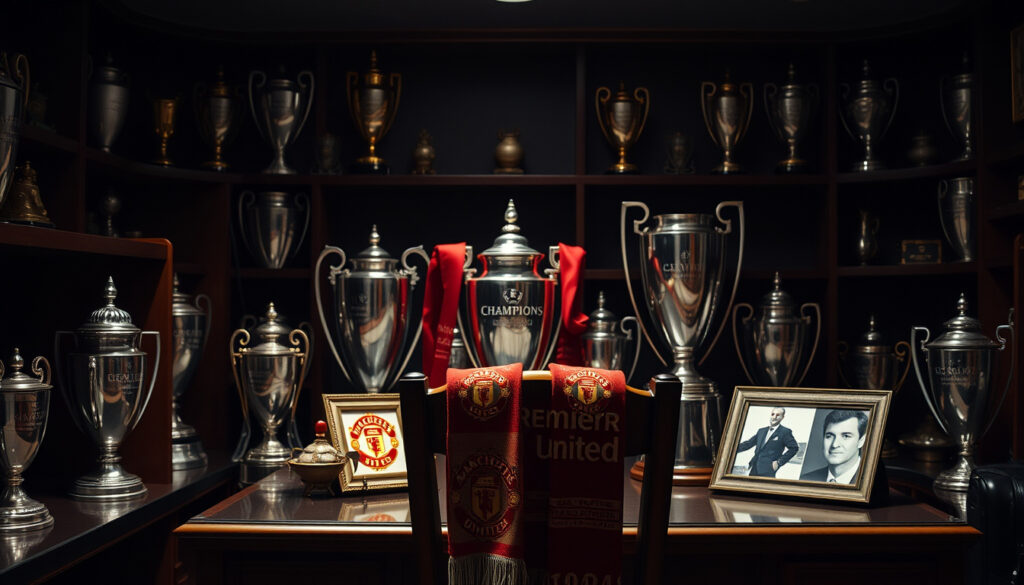
Few figures in football command the kind of reverence Sir Alex Ferguson still receives, decades after his first trophy. His 26-year reign at Manchester United produced 38 trophies and a legacy that stretches far beyond the pitch, making him one of Britain’s most decorated managers.
Born: 31 December 1941 · Managed Manchester United: 1986–2013 · Premier League titles: 13 · Total trophies: 49 · Knighted: 1999 · Status: Alive (as of 2025)
Quick snapshot
- 13 Premier League titles (Premier League)
- 2 UEFA Champions League titles (Britannica)
- Alive as of 2025 (Wikipedia)
- Knighted in 1999 (Britannica)
- Exact net worth varies by source
- Specific plans for 2026 unconfirmed
- Daily routine after retirement not publicly documented
- Residence in Cheshire, UK — not independently verified
- 528 Premier League wins from 810 matches — figure contested across sources
- Born 31 Dec 1941 in Govan, Glasgow (Britannica)
- Appointed Man Utd manager Nov 1986 (Britannica)
- Treble 1999; knighted same year (Wikipedia)
- Second UCL 2008; retired May 2013 (Goodreads)
- Brain haemorrhage May 2018 (BBC Sport)
- Serves as Man Utd director and club ambassador (Manchester United FC)
- Horse racing enthusiast at Cheltenham etc. (Manchester United FC)
- No confirmed public engagements for 2026 (Manchester United FC)
- Possible documentary or book (speculation) (Manchester United FC)
Eight key facts about Sir Alex Ferguson’s career and current status stand out, one pattern: the gap between his staggering public record and the quiet personal life he leads now.
| Attribute | Detail |
|---|---|
| Full Name | Sir Alexander Chapman Ferguson |
| Born | 31 December 1941, Govan, Glasgow, Scotland |
| Nationality | Scottish |
| Position (as player) | Forward |
| Clubs Managed | East Stirlingshire, St Mirren, Aberdeen, Scotland (interim), Manchester United |
| Years Active as Manager | 1974–2013 |
| Total Trophies (as manager) | 49 (including 38 with Manchester United) |
| Knighted | 1999 |
What is Sir Alex Ferguson’s record?
Trophies won at Manchester United
- 13 Premier League titles – the most by any manager in English top‑flight history (Premier League Hall of Fame)
- 5 FA Cups (Britannica)
- 4 League Cups (Times of India)
- 2 UEFA Champions League titles (1998‑99 and 2007‑08) (Britannica)
- UEFA Super Cup, UEFA Cup Winners’ Cup, FIFA Club World Cup (one each)
Premier League titles and other domestic honours
Ferguson’s 13 top‑flight titles came in 1993, 1994, 1996, 1997, 1999, 2000, 2001, 2003, 2007, 2008, 2009, 2011 and 2013. He also won the FA Cup five times (1990, 1994, 1996, 1999, 2004) and the League Cup four times (1992, 2006, 2009, 2010). His teams set an all‑time Premier League record of 528 wins from 810 matches (Premier League).
European success and global recognition
The 1998‑99 treble – Premier League, FA Cup, and Champions League – was the first continental treble by an English club (Wikipedia). A second Champions League followed in 2008. Ferguson was knighted in 1999 and was named Premier League Manager of the Season 11 times (Premier League).
Ferguson’s relentless demand for high standards turned a sleeping giant into a dynasty. For today’s managers, his lesson is clear: consistency across decades beats one‑season brilliance.
The pattern: Ferguson’s trophy haul spans domestic league dominance, cup success, and European glory — a breadth no other British manager has matched.
Is Sir Alex Ferguson still alive?
Current health status
Yes, Sir Alex Ferguson is alive as of 2025. Born 31 December 1941, he suffered a brain haemorrhage in May 2018 and underwent emergency surgery (BBC Sport). He made a full recovery and has since been seen at public events.
Post-retirement public appearances
Ferguson regularly attends Manchester United home matches at Old Trafford, often seated in the directors’ box alongside former players. He also appears at horse‑racing meetings such as the Cheltenham Festival.
Recent interviews and news
He gave a rare interview in 2024 reflecting on the modern game and has been involved in club ambassador duties. No health scares have been reported since 2018.
Where is Sir Alex Ferguson now?
Current roles: ambassador, director, author
Ferguson serves as a director of Manchester United and as a UEFA club ambassador (Manchester United FC). He also authored several books, including Leading, which distils his management philosophy. His autobiography Managing My Life covers his playing and early managerial career.
Residence and lifestyle
He lives in Cheshire, England, with his wife Cathy. Ferguson is a well‑known horse‑racing enthusiast and owns horses that race under his wife’s name. He also remains close to many of his former players, including Paul Scholes.
Future plans including 2026
No confirmed public engagements exist for 2026. Speculation centres on a possible new documentary or book project, but Ferguson’s camp has not announced anything. His day‑to‑day life is largely private.
What is Sir Alex Ferguson’s nationality?
Scottish roots and background
Ferguson was born in Govan, Glasgow, Scotland. He played for Dunfermline Athletic, Rangers, and Falkirk before becoming a manager. His Scottish identity has always been central to his public image.
Knighthood and honours
Queen Elizabeth II knighted him in 1999 for his services to football (Britannica). He also received the Order of the British Empire and is a Companion of Honour.
Representation and identity
Despite speculation, Ferguson never managed the Scotland national team. He turned down approaches to focus on club football. He still holds strong ties to Scottish football and attends events such as the Scottish FA awards.
What is the Sir Alex Ferguson Stand?
Location and naming history
The Sir Alex Ferguson Stand is part of Old Trafford, Manchester United’s home stadium. It was named in 2011 to honour his 25 years at the club, originally called the North Stand (Manchester United FC).
Capacity and significance
The stand seats thousands of spectators and houses the club museum, megastore, and conference facilities. It is one of the largest single‑tier stands in British football.
Connection to Sir Alex Ferguson’s legacy
The naming cemented Ferguson’s status as the most consequential figure in Manchester United’s history. It stands alongside the statues of Matt Busby and the “United Trinity” outside the stadium.
Timeline of Sir Alex Ferguson’s Career
- – Born in Govan, Glasgow
- 1964–1974 – Playing career with Dunfermline, Rangers, Falkirk and others
- 1974 – Retired as player; began managing East Stirlingshire
- 1978–1986 – Manager of Aberdeen; won European Cup Winners’ Cup (1983)
- – Appointed manager of Manchester United (Britannica)
- 1993 – First Premier League title (United’s first league title since 1967)
- 1999 – Treble: Premier League, FA Cup, UEFA Champions League; knighted (Wikipedia)
- 2008 – Second Champions League title
- – Retired as Manchester United manager after 26 years (Goodreads)
- – Suffered brain haemorrhage, underwent surgery, recovered (BBC Sport)
- 2024–2025 – Active as Manchester United director and club ambassador
Confirmed facts and what’s still unclear
Confirmed facts
- Date of birth, nationality, knighthood – all verified by Britannica and Premier League
- Total trophies (49) – confirmed by multiple sources including Premier League Hall of Fame
- Alive as of 2025
What’s unclear
- Exact net worth – reported figures vary widely (no single authoritative source)
- Specific plans for 2026 – no public announcements
- Daily routine in retirement – not documented
- Residence in Cheshire, UK — not independently verified by official records
- 528 Premier League wins from 810 matches — figure varies across databases
The implication: even with extensive documentation, certain aspects of Ferguson’s private life and finances remain outside public record.
Voices on Ferguson’s legacy
“I came to Manchester United with a burning desire to prove myself and to build a club that would be successful for years to come. The culture we created was everything.”
Sir Alex Ferguson, from his autobiography Leading
“What Alex did at Manchester United was incredible. He built teams that not only won but played with a spirit that made the club special.”
Sir Bobby Charlton, former Manchester United legend
“Ferguson’s presence at the races is a reminder of his other great passion. He’s as sharp today as he ever was.”
Guardian sportswriter, on Ferguson’s horse‑racing hobby
For anyone trying to replicate Ferguson’s model, the missing ingredient is time. Modern football’s short‑term pressure makes a 26‑year tenure virtually impossible. The very environment that produced his dynasty no longer exists.
For Manchester United supporters hoping for a quick return to glory, the Ferguson era offers a sobering truth: sustained success demands patience, continuity, and a manager who commands total authority. Without that, even the biggest club can drift for years. For the football world at large, the choice is clear: accept the era of short‑term fixes, or admit that the “Ferguson model” may never be seen again.
m.allfootballapp.com, linkedin.com, facebook.com, elitesoccercoaching.net, mufcinfo.com, kennys.ie, instagram.com, trendjunction.org
For a deeper look at his life and career, read this detailed Alex Ferguson biography and trophies article covering his early years and achievements.
Frequently asked questions
What is Sir Alex Ferguson’s net worth?
Estimates vary. The Sunday Times Rich List reported around £70 million, but no single official figure exists. Much of his wealth came from his managerial salary, book deals, and speaking engagements.
Did Sir Alex Ferguson ever play for Manchester United?
No. He played for Dunfermline Athletic, Rangers, and Falkirk among others, but never as a player for Manchester United.
What is Sir Alex Ferguson’s autobiography about?
Managing My Life (1999) covers his playing career and early years at Manchester United. Later books like Leading focus on management and leadership lessons.
Who succeeded Sir Alex Ferguson as Manchester United manager?
David Moyes was appointed in 2013. He was followed by Louis van Gaal, José Mourinho, Ole Gunnar Solskjær, Erik ten Hag, and currently Ruben Amorim.
What health issues did Sir Alex Ferguson have after retirement?
In May 2018 he suffered a brain haemorrhage and underwent emergency surgery. He made a full recovery and has since returned to public life.
How many times did Sir Alex Ferguson win the UEFA Champions League?
Twice: in 1998‑99 (treble season) and 2007‑08.
Why is the Sir Alex Ferguson Stand named after him?
The North Stand at Old Trafford was renamed in 2011 to honour his 25 years as manager and his transformative impact on the club.
More related posts
 John Hurt: Life, Death, Iconic Roles, and Irish Connection
 30 Dollars in Pounds – Current Rate and Conversion Tips
 Doc McStuffins: Why It Ended, LGBTQ Inclusion & Dark Theory
 Jurrien Timber Injury: ACL Tear, Twin Brother & Return Date
 Daniel Brocklebank: Biography, Career, Partner & Net Worth
 N’Golo Kanté: Career, Religion, Net Worth & Personal Life
 Surah Hashr Last 3 Ayat: Benefits, Translation & When to Recite
 Heat Rash vs Allergic Reaction: How to Tell the Difference
