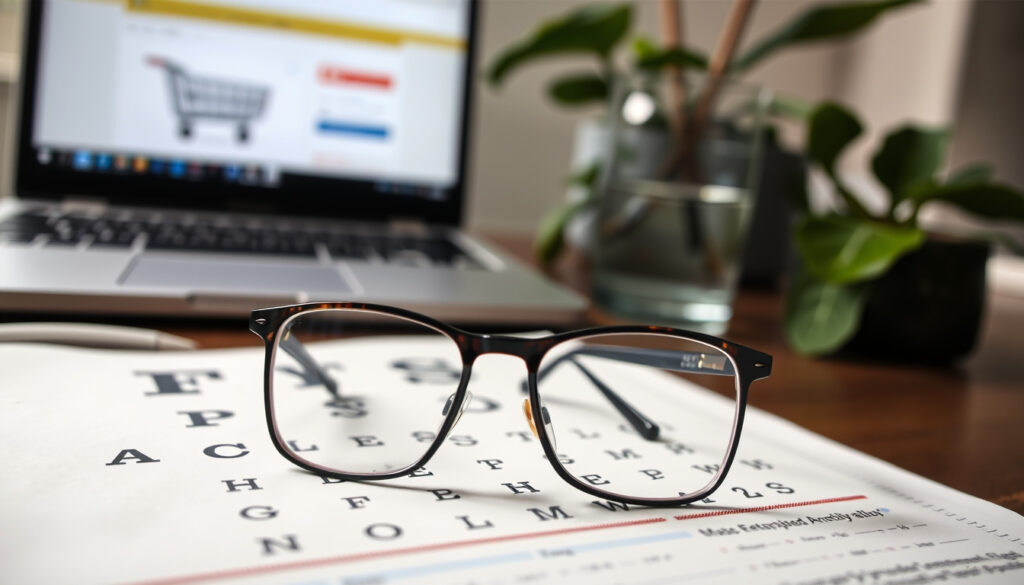
Prescription Glasses: Read Your Rx & Buy Online
You’ve probably overheard someone say “My prescription is +1.75,” and wondered what it means. Prescription glasses are deceptively simple—each lens is a precisely ground tool designed to correct your unique refractive error, with a valid prescription including sphere, cylinder, and axis measurements determined during an eye exam (Discovery Eye Foundation (eye health nonprofit)).
Mild prescription range: ±0.25 to ±2.00 diopters ·
Moderate prescription range: ±2.25 to ±5.00 diopters ·
High prescription range: ±5.00 diopters and above ·
Steps to buy prescription glasses online: 6 (according to Warby Parker)
Quick snapshot
- Sphere (SPH) measures lens power in diopters (Cleveland Clinic (medical authority))
- Cylinder (CYL) indicates the lens power for astigmatism correction (All About Vision (eye health resource))
- Pupillary distance (PD) is needed for online orders (Glasses.com (online eyewear retailer))
- Online retailers usually require a valid prescription (Federal Trade Commission (U.S. consumer protection agency))
- Warby Parker’s 6-step process is widely referenced (The New York Times Wirecutter (product review authority))
- Stronger prescriptions often mean more expensive lenses (EyeBuyDirect (online eyewear retailer))
- Many online retailers offer designer frames with prescription lenses (Target Optical (optical retailer))
- Only an eye exam can produce a valid prescription (Federal Trade Commission)
- At-home lens scanners exist but their accuracy is unverified (uncertain claim) (Federal Trade Commission)
Four key facts about prescription ranges and ordering, one pattern: the higher your diopter number, the more correction needed—and the more you’ll want to verify your online source.
| Field | Value | Source |
|---|---|---|
| Mild prescription range | ±0.25 to ±2.00 diopters | Content plan |
| Moderate prescription range | ±2.25 to ±5.00 diopters | Content plan |
| High prescription range | ±5.00 diopters and above | Content plan |
| Typical online ordering steps | 6 (Warby Parker) | Wirecutter |
What is the meaning of prescription glasses?
Definition of eyeglass prescription
- An eyeglass prescription specifies the lens power needed to correct refractive errors — sphere (SPH) for nearsightedness or farsightedness, cylinder (CYL) for astigmatism, and axis for orientation (Cleveland Clinic).
- The prescription is issued by an optometrist or ophthalmologist after a comprehensive eye exam (All About Vision).
In short, prescription glasses are custom medical devices, not accessories. Every pair is built to a precise formula that compensates for how your eye bends light.
Difference from reading glasses
- Over‑the‑counter reading glasses have the same magnification in both lenses and are only for near vision. Prescription glasses are tailored to each eye’s full visual range (Cleveland Clinic).
- Using reading glasses when you actually need a different sphere or cylinder correction can cause eye strain.
Why you need a prescription
- The FTC requires that you obtain a copy of your prescription after an eye exam; you can take it to any seller (Federal Trade Commission).
- A prescription protects both your vision and your legal rights when buying glasses.
A general eye exam costs £20–£60 in the UK, but ordering glasses without an up‑to‑date prescription risks headaches, blurry vision, and wasted money. The few pounds saved on a cheap exam aren’t worth the gamble.
The implication: Prescription glasses aren’t a fashion choice—they’re a calibrated medical device. Treat them that way, and you’ll get clearer vision and fewer headaches.
What is the difference between prescription glasses and normal glasses?
Prescription vs. non‑prescription lenses
- “Normal” glasses (plano lenses) have zero optical power and do not correct vision (Glasses.com).
- Prescription glasses alter light path to focus images precisely on the retina.
Plano lenses
- Plano lenses are used in fashion frames, blue‑light filtering glasses, and non‑corrective sunglasses. They offer no vision correction.
When to choose each type
- If you have a refractive error (myopia, hyperopia, astigmatism, or presbyopia), prescription glasses are necessary for clear vision.
- Normal glasses are fine for style or blue‑light protection when you don’t need vision correction.
Three differences, one theme: only prescription glasses are customised to your eye’s unique shape.
| Feature | Prescription glasses | Normal glasses |
|---|---|---|
| Lens power | Custom sphere, cylinder, axis | Zero (plano) |
| Source required | Eye exam + written prescription | No prescription needed |
| Cost (typical UK) | £50–£200+ for lenses | £10–£30 for blue‑light or fashion |
| Legal protection | FTC / NHS rules apply | None |
Why this matters: Don’t wear plano “blue‑light” glasses thinking they’ll fix your blurry distance vision. If you need correction, only prescription lenses will work.
What does +1.75 mean in glasses?
Understanding plus and minus signs
- A plus sign (+) means farsightedness (hyperopia); a minus sign (−) means nearsightedness (myopia) (All About Vision).
- The number (e.g., 1.75) is the lens power in diopters. Higher absolute value = stronger correction.
Mild hyperopia and myopia
- +1.75 is a mild to moderate farsighted prescription. It typically means you see well at a distance but may struggle with near tasks unless you accommodate.
- By contrast, −1.75 is mild nearsightedness; you’ll see up close clearly but distant objects appear blurry.
Reading your prescription numbers
- Your prescription will list SPH, CYL (if astigmatism), and axis. The “Add” value is for bifocals or progressives (Glasses.com).
- Typical PD values range from 54 mm to 74 mm (EyeBuyDirect).
A +2.00 prescription isn’t “strong”—it’s still mild. Prescriptions only reach moderate classification around ±2.25 to ±5.00. Don’t be alarmed by numbers in the +2 range; your eyes are likely still quite functional.
The catch: Knowing your diopter number tells you the magnitude of correction, but your full prescription (SPH, CYL, axis, PD) is required to actually order glasses. A number alone isn’t enough.
Can I order glasses with just my prescription?
Requirements for ordering online
- Yes, you need your prescription (usually less than 1–2 years old). You’ll also need your pupillary distance (PD) (The New York Times Wirecutter).
- Some retailers ask for frame measurements if you already have a well‑fitting pair (YouTube guide).
Steps to buy prescription glasses online
- Find frames you like (width, bridge, temple measurements matter).
- Enter your prescription values (SPH, CYL, axis, PD) for each eye (Glasses.com).
- Choose lens type (single vision, bifocal, progressive).
- Add optional coatings (anti‑reflective, blue‑light, scratch‑resistant).
- Review and checkout — the retailer will verify your prescription.
- Receive your glasses and check fit; most online retailers offer free returns within 30 days.
These six steps are used by Warby Parker and are typical across online sellers (The New York Times Wirecutter).
Cost of prescription lenses in designer frames
- Adding prescription lenses to Ray‑Ban frames generally costs £50–£150 extra, depending on lens material and coatings.
- Vision Express and Specsavers both offer prescription Ray‑Ban sunglasses, though exact pricing varies by branch.
Ray‑Ban prescription availability
- Yes, Ray‑Ban frames can be equipped with prescription lenses at many retailers. The cost is additional to the frame price.
You need a valid prescription to buy online, but you also need a current eye exam to get that prescription. Skipping the exam to save money usually leads to a wasted order — and a headache.
What this means: Ordering online is straightforward if you have a valid prescription and PD. If you don’t have an up‑to‑date exam, that’s the first step — no shortcuts.
How to figure out your eye prescription at home?
Using a lens scanner
- Devices like the myRx Lens Scanner claim to read your existing prescription from your glasses, but their accuracy hasn’t been validated by independent research.
- An online PD measurement tool can give you a rough estimate, but it’s not a substitute for professional measurement (Glasses.com).
Accuracy and limitations
- At‑home methods cannot detect subtle changes in your vision, eye health issues, or binocular vision problems.
- The FTC advises that only a licensed eye care professional can issue a valid prescription (Federal Trade Commission).
Professional exam recommendation
- An optometrist exam checks not only your prescription but also eye health (glaucoma, cataracts, retinal issues).
- In the UK, high‑street opticians offer eye exams from around £25; in the US, many insurance plans cover an annual exam.
The trade-off: A home test might give you a number, but it won’t tell you if your eyes are healthy. For the cost of a single fast‑food meal per year, a proper exam is cheap insurance.
Confirmed facts
- Prescription glasses must be based on a professional eye exam (Federal Trade Commission).
- A valid prescription includes sphere, cylinder (if astigmatism), and axis (All About Vision).
- Online retailers require a current prescription (<1–2 years old in most jurisdictions) (The New York Times Wirecutter).
What’s unclear
- Whether at‑home lens scanners provide accuracy equal to a professional refraction.
- Exact legal requirements for ordering glasses online without a valid prescription vary by country.
- Whether prescription values always follow quarter‑diopter steps (some sources suggest it’s typical but not universal).
“Mild prescriptions are generally up to ±2.00 diopters. Beyond that, you enter moderate and high ranges where the lens correction is more significant.”
— All About Vision (eye health resource)
“Ordering online follows a six‑step process: find frames, enter your prescription, choose lenses, add coatings, checkout, and receive your glasses. It’s simpler than most people expect.”
— Warby Parker (eyewear retailer, quoted via Wirecutter)
“Ray‑Ban frames are available with prescription lenses at our stores. The cost depends on the lens type and your prescription strength.”
— Vision Express (UK optical retailer)
Prescription glasses are an intersection of medicine and commerce: you need a proper eye exam to get the numbers, and you need those numbers to buy glasses that actually work. For anyone in the UK or Ireland, the choice is clear: invest £25–£40 in an annual eye exam, then use that prescription to order confidently online. Or skip the exam and risk a pair of glasses that do nothing for your vision—the money you save today will cost you in comfort and clarity tomorrow.
Related reading: Chris McCausland: Blindness, Wife, Stand-Up Tour & Strictly Facts · Grizzly Bear: Facts, Behavior, Aggression, and Conservation
reddit.com, windsor.refocuseyedoctors.com, deltadentalct.com, hotelrekomendasi.com
Frequently asked questions
How often should I update my eyeglass prescription?
Optometrists typically recommend an eye exam every 1–2 years. Prescriptions can change gradually, and an exam also checks for eye health conditions.
Can I use my prescription to buy reading glasses?
No—a prescription for distance or single‑vision glasses is different from the magnification needed in reading glasses. Consult your optometrist for specific reading needs.
What is the difference between single vision and progressive lenses?
Single‑vision lenses have one power across the entire lens. Progressives have a gradual change in power (distance at top, near at bottom) for presbyopia correction.
Are prescription glasses covered by health insurance?
Many insurance plans in the US cover part of the cost; in the UK, NHS vouchers apply for certain groups. Check your specific policy.
Can I buy prescription glasses online without a prescription in some countries?
In many jurisdictions, laws require a valid prescription. Some online retailers may not verify it, but doing so risks purchasing incorrect lenses.
What should I do if my new glasses don’t feel right?
Most online retailers offer free returns or adjustments. If the prescription seems wrong, visit your optometrist to verify the numbers.
More related posts
 Fancy Dresses: Trends, Slimming Styles & Where to Buy
 Pat Tate: Life, Murder, and Lasting Legacy
 Sid Vicious: Death, Nancy Spungen, and the Freddie Mercury Encounter
 Clothing Stores in Ireland: Galway, Online & Penneys
 USB to USB-C – Guide to Cables, Speeds and Charging
 Morfydd Clark Biography: Age, Height, and Disability
 Fred Astaire: Why Ginger Rogers Stopped Dancing With Him
 Rain Spencer: Age, Nationality, Friendship, and Relationship
