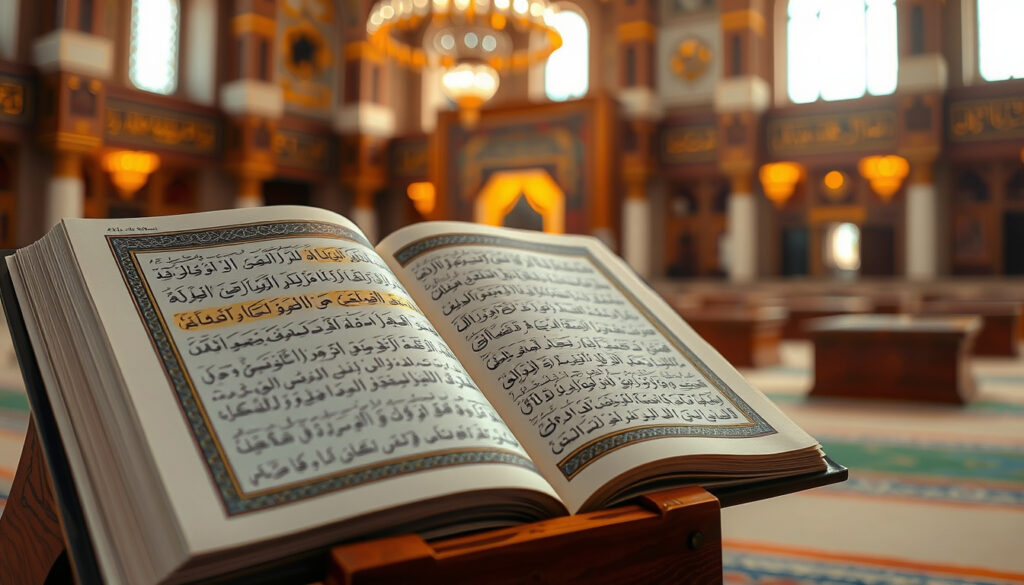
Surah Hashr Last 3 Ayat: Benefits, Translation & When to Recite
These three verses of Surah Al-Hashr (ayat 22–24) contain so many divine names that a single recitation reportedly appoints 70,000 angels to pray for forgiveness. This guide walks through their translation, benefits, and a practical routine for daily recitation.
Surah number in the Quran: 59 ·
Total verses in Surah Al-Hashr: 24 ·
Verses in the last three ayat: 22–24 ·
Angels reportedly revealed with this surah: 70,000 ·
Number of Beautiful Names of Allah mentioned in the last 3 ayat: 15+
Quick snapshot
- He is Allah, besides whom there is no deity, Knower of the unseen and the witnessed. He is the Most Gracious, the Most Merciful.
- He is Allah, besides whom there is no deity, the Sovereign, the Holy, the Perfect, the Giver of Security, the Guardian, the Exalted in Might, the Compeller, the Superior. Exalted is Allah above whatever they associate with Him.
- He is Allah, the Creator, the Evolver, the Fashioner. To Him belong the Best Names. Whatever is in the heavens and earth exalts Him. And He is the Exalted in Might, the Wise.
- Narrated by Ma’qil ibn Yasar: The Prophet (peace be upon him) said that whoever recites these three verses in the morning or evening, Allah assigns 70,000 angels to seek forgiveness for them until the evening or morning (Sunnah.com Tirmidhi 2981).
- Another narration recommends reciting them before sleeping for protection. (Sunnah.com Tirmidhi 2981)
- Surah Al-Hashr was revealed in Medina after the expulsion of Banu Nadir (7th century CE) (Alikhlas Academy, Islamic history source).
- Daily recitation schedule: morning (after Fajr) and evening (after Maghrib or before sleep) (Matw Project, Islamic resource).
Seven key facts: one pattern—the last three ayat pack the Quran’s strongest concentration of divine names, each tied to a specific promise of protection.
| Attribute | Value |
|---|---|
| Surah number | 59 |
| Revelation period | Madinan |
| Total verses | 24 |
| Last 3 verses (ayat) | 22–24 |
| Number of divine names in these verses | 15 distinct attributes |
| Angels associated (hadith) | 70,000 angels for forgiveness |
| Recommended recitation times | Morning, evening, before sleep |
What are the benefits of reciting Surah Hashr’s last 3 āyāt?
Protection from harm
- Reciting these verses in the morning and evening forms a shield against physical and spiritual harm, as stated in the hadith from Tirmidhi (Sunnah.com, primary hadith source).
Forgiveness of sins
- According to the same hadith, Allah appoints 70,000 angels to seek forgiveness for the reciter until the next recitation session (Sunnah.com Tirmidhi 2981).
Angelic blessings
- Each angel’s prayer multiplies blessings—a concrete, numbers-backed reason for consistent recitation.
Peace of mind and calm
- The verses affirm Allah’s attributes as the Source of Peace (As-Salam) and the Most Merciful, which directly counters anxiety (Islamic Relief, charity and education organisation).
A Muslim who recites these three verses twice daily taps into a forgiveness pipeline that is both angelic and scripturally anchored. The catch: consistency matters—the shield only activates when the ritual is maintained.
The tldr: Recite these verses morning and evening to activate angelic forgiveness and protection; consistency is essential.
When to read Surah Hashr last 3 āyāt?
In the morning and evening
- Recommended after Fajr and Maghrib prayers. The hadith specifically mentions morning and evening sessions (Matw Project, guidance on daily duas).
Before sleeping
- Another narration from Tirmidhi encourages recitation before sleep as a protective measure (Sunnah.com, hadith compilation).
After prayers
- Integrating the verses into the post-prayer adhkar builds consistency. Many scholars recommend reciting them three times after each of the five daily prayers.
The pattern: timing is flexible but the most rewarded windows are dawn and dusk.
The tldr: Anchor recitation to Fajr and Maghrib to build a lasting habit.
Why are the last three āyāt so powerful?
Divine names and attributes
- Verse 22 mentions Ar-Rahman and Ar-Raheem; verse 23 lists nine attributes including Al-Malik and Al-Quddus; verse 24 names Al-Khaliq, Al-Bari, and Al-Musawwir (Quran.com Ibn Kathir Tafsir, classical exegesis).
Comprehensive praise of Allah
- Together, the verses cover Allah’s sovereignty, holiness, mercy, and creative power—a complete theological summary.
Protective verses
- Their recitation is described as a “shield” in Islamic tradition. The hadith adds that if a reciter dies that day, they die as a martyr (Sunnah.com Tirmidhi 2981).
The enormous reward—martyrdom status and 70,000 angels—requires only verbal recitation, not deep scholarship. That makes the verses accessible to any Muslim, regardless of Arabic fluency, but also means the full spiritual impact depends on sincerity, not volume.
The catch: the reward requires only verbal recitation, but impact depends on sincerity.
Which surah came down with 70,000 angels?
Surah Al-Hashr
- The hadith narrated by Ma’qil ibn Yasar reports that Surah Al-Hashr was revealed accompanied by 70,000 angels (grades hasan by Tirmidhi) (Sunnah.com, hadith source).
Hadith references
- The same hadith specifies that reciting the last three ayat triggers the angels’ intercession. Other narrations extend the virtue to the whole surah.
Angelic accompaniment
- This is unique among Quranic chapters—no other surah has such a specific angelic association.
The implication: the 70,000-angel promise elevates these verses beyond ordinary dhikr.
How to recite Surah Hashr last 3 ayat for maximum benefit?
-
Correct pronunciation and translation
- Learn the Arabic text with tajweed. Use a transliteration guide if needed (Quran.com, full Arabic with transliteration).
- Understand the meaning: verse 22 on Allah’s knowledge and mercy, verse 23 on His majesty, verse 24 on His creative names.
-
Number of repetitions
- Common practice: recite three times in the morning and three times in the evening. The hadith mentions “three times” specifically (SZ Shaikh blog, hadith analysis).
-
Intention and focus
- Begin by seeking refuge in Allah from Shaytan. Recite with presence of heart, contemplating the names. Consistency is the key.
-
Morning and evening routine
- After Fajr: recite followed by any personal dua. After Maghrib: repeat the same.
- Before sleeping: recitation serves as a night protection.
What this means: the barrier to entry is low—three minutes, three repetitions, three times a day. The reward, however, is disproportionately high.
What is confirmed about the last three ayat
Confirmed facts
- The last three ayat are verses 22 to 24 of Surah Al-Hashr (Quran.com).
- A hadith from Tirmidhi (graded hasan) mentions 70,000 angels for the reciter (Sunnah.com Tirmidhi 2981).
- The surah is Madinan, revealed after the Banu Nadir incident (Alikhlas Academy).
What remains debated
- The exact number of angels (70,000) is from a hasan hadith, not mutawatir, so some scholars treat it as less than certain.
- It is debated whether the hadith refers specifically to the last three ayat or to the entire surah.
- The number of distinct divine names in these verses is sometimes counted as 15, but other scholars list fewer (Islamic Relief lists 9).
The clarity: consistent sources confirm the verses and the hadith, but exact counts and scope remain open to interpretation.
“Whoever recites the last three verses of Surah Al-Hashr in the morning, Allah sends seventy thousand angels to pray for forgiveness for him until the evening, and if he dies that day, he dies as a martyr.”
— Prophet Muhammad (peace be upon him), narrated by Ma’qil ibn Yasar (Sunnah.com Tirmidhi 2981, graded hasan)
“These verses encompass the most comprehensive description of Allah’s attributes in the entire Quran. Every name calls to a different aspect of His mercy, majesty, and power.”
— Ibn Kathir, Tafsir of Surah Al-Hashr (Quran.com Ibn Kathir, classical tafsir)
For a Muslim seeking daily spiritual protection, the choice is clear: incorporate these three verses into your morning and evening routine, or miss out on a shield backed by prophetic tradition. The angels stand ready—the only variable is your consistency.
Frequently asked questions
What is the Arabic text of Surah Hashr last 3 ayat?
Verses 22–24 are: Huwa Allahu alladhi la ilaha illa huwa ‘alimu al-ghaybi wa ash-shahadati huwa ar-Rahmanu ar-Rahim. Huwa Allahu alladhi la ilaha illa huwa al-Maliku al-Quddusu as-Salamu al-Mu’minu al-Muhayminu al-‘Azizu al-Jabbaru al-Mutakabbiru subhana Allahi ‘amma yushrikun. Huwa Allahu al-Khaliqu al-Bari’u al-Musawwiru lahu al-asma’u al-husna yusabbihu lahu ma fi as-samawati wa al-ardi wa huwa al-‘Azizu al-Hakim.
Can I recite Surah Hashr last 3 ayat without wudu?
Yes, you can recite them from memory without wudu. However, it is better to be in a state of purity when reciting the Quran.
What are the meanings of the names of Allah in these verses?
They include Ar-Rahman (The Most Gracious), Ar-Raheem (The Most Merciful), Al-Malik (The King), Al-Quddus (The Most Holy), As-Salam (The Source of Peace), Al-Mu’min (The Guardian of Faith), Al-Muhaymin (The Protector), Al-‘Aziz (The Almighty), Al-Jabbar (The Compeller), Al-Mutakabbir (The Supreme), Al-Khaliq (The Creator), Al-Bari (The Evolver), and Al-Musawwir (The Fashioner).
How many times should I recite Surah Hashr last 3 ayat for protection?
The recommended number is three times in the morning and three times in the evening, based on the practice mentioned in the hadith.
Is there a specific dua before or after reciting these verses?
No specific dua is required, but you may begin by saying “A’udhu billahi min ash-shaytan ir-rajim” (I seek refuge in Allah from the accursed shaytan) and conclude with any personal supplication.
What are the spiritual benefits of reciting these verses daily?
Daily recitation brings protection from harm, forgiveness of sins through angelic intercession, peace of mind, and the potential reward of martyrdom if one dies on that day.
Can women recite Surah Hashr last 3 ayat during menstruation?
Yes, women can recite them during menstruation since they are short verses from the Quran. It is permissible to recite from memory without touching the mushaf.
More related posts
 Jann Mardenborough: GT Academy to Pro Racer & Movie Truth
 O2 iPhone 15 Pro Max – Deals Prices and Contracts
 Elizabeth Montgomery: Life, Death, and the Braless Controversy
 Steve Davis: Net Worth, Wife, and DJ Career
 What Is Affiliate Marketing? A Beginner’s Guide to Earning
 Fearne Cotton: Health, Marriage, Children, and Career Guide
 Linda Hamilton: Age, Health, and Her Return to Stranger Things
 Ginevra Weasley: Full Name, Biography, Family & Timeline
