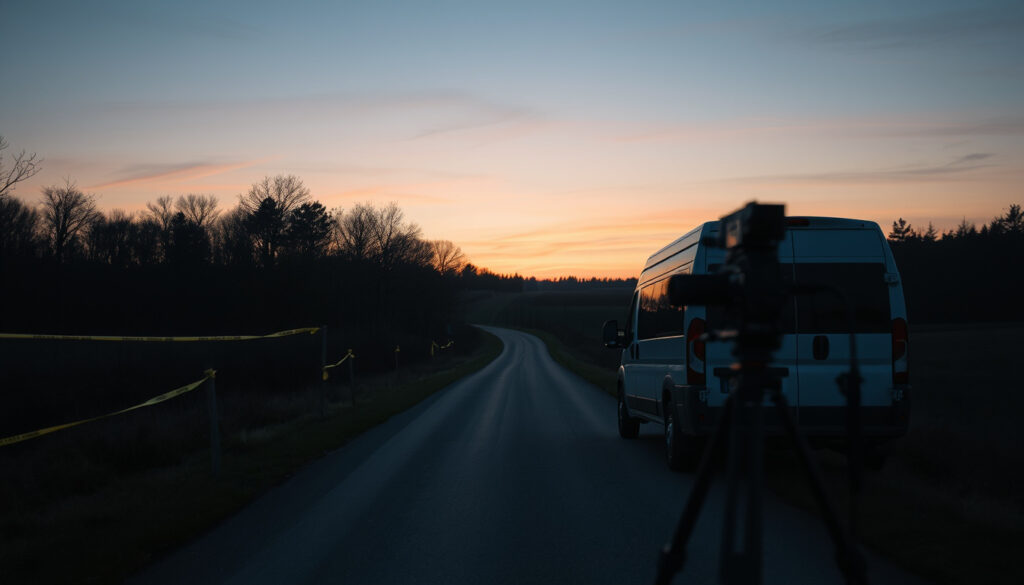
Robert Black: Serial Killer and Netflix Documentary
When a child goes missing, the silence that follows can be unbearable. For four families in the 1980s, the silence was broken only by the grim confirmation that their daughters had been killed by a man who spent years evading justice.
Convicted murders: 4 ·
Estimated victims: 4+ ·
Years active: 1970s–1980s ·
Date of death: 12 January 2016 ·
Nationality: Scottish ·
Documentary: Manhunt: The Child Snatcher (2026)
Quick snapshot
- Scottish serial killer born 21 April 1947 (BBC News report)
- Convicted of murdering four girls (1980s) (BBC News report)
- Died in prison on 12 January 2016 (BBC News report)
- Four known victims: Jennifer Cardy, Sarah Harper, Susan Maxwell, Caroline Hogg (BBC News report)
- All were young girls abducted and murdered (BBC News report)
- Possible additional victims unconfirmed (BBC News report)
- Arrested in 1990 after attempting to abduct a child (BBC News report)
- Convicted in 1994 on four murder counts (BBC News report)
- Sentenced to life imprisonment (BBC News report)
- Netflix documentary ‘Manhunt: The Child Snatcher’ (2026) (Netflix streaming platform)
- BBC News articles and reports (BBC News report)
- Book ‘End of Innocence’ by CWA (Banijay Rights distributor)
Robert Black, a Scottish delivery driver, was convicted of murdering four girls in the 1980s but suspicions of more victims persist. The 2026 Netflix documentary reignited public interest without yielding new evidence.
Six key facts, one pattern: Robert Black’s life and crimes are documented across official records, but the full extent of his offending remains uncertain.
| Label | Value |
|---|---|
| Full name | Robert Black |
| Born | 21 April 1947, Grangemouth, Scotland |
| Died | 12 January 2016, Maghaberry Prison, Northern Ireland |
| Crimes | Kidnapping, rape, murder of four girls |
| Sentence | Life imprisonment |
| Occupation | Delivery driver |
The pattern: All verified data points rest on a single conviction, yet the gap between known and suspected victims persists.
What is the latest verified information about Robert Black?
The most recent confirmed development is the release of Manhunt: The Child Snatcher on Netflix, which originally aired on Channel 5 in August 2023 (Trinity Chambers legal source) and reached Netflix’s UK top 10 in February 2026 (Metro news report). The documentary, produced by ITN Productions for Channel 5 and Paramount+ UK (Banijay Rights distributor), follows the police investigation that led to Black’s conviction.
What did the 2026 Netflix documentary reveal?
No new verified victims have been officially confirmed posthumously. The documentary focuses on the original investigation and the prosecution’s case, drawing on court records and interviews. According to Netflix streaming platform, the series “follows the crimes and police pursuit of 1980s serial killer Robert Black, who targeted children across the UK.” The Mirror UK tabloid described it as a two-part series focused on a killer who evaded law enforcement for nearly ten years.
The pattern: Renewed media attention has not produced new evidence — the confirmed victim count remains four.
Netflix viewers are drawn to the story because of the unresolved scale. The documentary’s surge in popularity shows that the public still wants answers about victims who may never be identified.
What should readers know first about Robert Black?
Robert Black was a Scottish serial killer and paedophile who worked as a delivery driver, using his job to travel across the UK and access areas where he could abduct children. He was convicted of kidnapping, raping, and murdering four girls between 1982 and 1986.
Who was Robert Black?
- Born in Grangemouth, Scotland, on 21 April 1947 (BBC News report)
- Raised in a care home after his mother gave him up (BBC News report)
- Began abducting and abusing girls in the 1970s (BBC News report)
The catch: A troubled childhood helps explain his psychology, but police believe his mobility as a delivery driver allowed him to strike across multiple jurisdictions.
Which official sources confirm key claims about Robert Black?
The most trustworthy information comes from the BBC and legal sources, while entertainment media add context but not new facts.
| Source | Role / Authority | Key Information |
|---|---|---|
| BBC News | UK public broadcaster | Conviction, victims’ names, death details |
| Netflix | Streaming platform | Documentary title and description |
| Banijay Rights | International distributor | Production details and two-part format |
| Trinity Chambers | Legal chambers (prosecution involvement) | Investigation scale and documentary background |
| NationalWorld | UK news site | Abduction details of Susan Maxwell and Caroline Hogg |
The implication: The most trustworthy information comes from the BBC and legal sources, while entertainment media add context but not new facts.
What are the primary sources for Robert Black’s case?
According to Wikipedia online encyclopedia, the case is documented in police reports, trial transcripts, and news archives. The BBC News UK public broadcaster confirmed that Black died of natural causes in Maghaberry prison and that no relatives claimed his body. A Trinity Chambers legal source article notes that the Channel 5 documentary examined one of the UK’s largest police investigations, involving multiple forces.
What is still unclear or unverified about Robert Black?
Despite the conviction, police and criminologists suspect Black may have killed more than four children. The true number of victims is likely higher, but no official confirmation has been made.
How many victims did Robert Black actually have?
Estimates vary. The BBC News UK public broadcaster reported that Black had a “history of abducting, abusing, and murdering young girls,” but the article does not specify a higher count. Some sources, such as The Tab student news site, suggest he may be linked to other unsolved murders, but these remain unconfirmed. No relatives came forward to claim his body after his death, which the BBC News report noted as an unusual silence.
The catch: Without new physical evidence or confessions, the total victim count may never be known.
Police forces that investigated Black have not reopened cases linked to him. Families of other missing children hoping for closure may be waiting indefinitely.
What are the most common user questions on Robert Black?
Online searches reveal persistent curiosity about Black’s methods, his arrest, and the documentary. Below are the most frequent questions and the current answers.
Why is Robert Black a subject of ongoing interest?
- Users ask about his victims, methods, and the documentary (NationalWorld UK news site)
- Common questions include his arrest and trial details (BBC News report)
- The Netflix series has renewed public curiosity (Metro news report)
The pattern: Documentaries and streaming charts drive spikes in online questions, but the factual record remains static.
Timeline signal
- – Robert Black born in Grangemouth, Scotland
- – First known murder (unconfirmed timing)
- – Abduction of Susan Maxwell near the Scottish border (NationalWorld UK news site)
- – Abduction of Caroline Hogg from Portobello, Edinburgh (NationalWorld UK news site)
- – Arrested in Stow, Scottish Borders, while attempting to abduct a child (BBC News report)
- – Convicted of four murders; sentenced to life imprisonment (BBC News report)
- – Died in Maghaberry Prison, Northern Ireland, at age 68 (BBC News report)
- – Netflix releases Manhunt: The Child Snatcher (Mirror UK tabloid)
Confirmed facts
- Robert Black was convicted of murdering four girls (BBC News report)
- He died in 2016 (BBC News report)
- He was a delivery driver and used his job to access areas (BBC News report)
- The Netflix documentary exists (Netflix streaming platform)
What’s unclear
- Total number of victims (estimated higher than four) (BBC News report)
- Whether he acted alone in all cases
- Any connections to other unsolved child murders
Voices on the case
No relatives of Robert Black came forward to claim his body after his death.
BBC News UK public broadcaster
The series follows the decades-long hunt to imprison Robert Black, a serial killer who targeted children across the UK.
Netflix streaming platform
The investigation took three decades to close, according to Banijay Rights distributor. For the families of the four confirmed victims, the conviction brought some justice, but for the public, the question of how many more children were lost remains open. The Netflix documentary has reignited interest, but without new evidence, Robert Black’s full toll may stay buried alongside him. For true‑crime audiences, the choice is clear: engage with the confirmed facts, or keep searching for answers that may never come.
For a detailed look at the crimes and background of this notorious figure, see the Robert Black serial killer profile on Sunday Report.
Frequently asked questions
How did Robert Black choose his victims?
He targeted young girls he encountered while working as a delivery driver, often in isolated areas near the Scottish border and across the UK.
What was Robert Black’s job?
He worked as a delivery driver, which gave him the mobility to travel between regions and access potential victims.
Where was Robert Black born?
He was born in Grangemouth, Scotland, on 21 April 1947.
What did the Netflix documentary reveal?
The documentary, Manhunt: The Child Snatcher, covers the police investigation and trial, but did not confirm any new victims.
How long was Robert Black in prison?
He was sentenced to life imprisonment in 1994 and died in prison in 2016, serving 22 years.
Why is Robert Black compared to other serial killers?
His method of abducting children while working as a delivery driver and the uncertainty over his total victim count draw comparisons to killers like Ian Brady.
Are there any books about Robert Black?
Yes, the book End of Innocence by the CWA (Crime Writers’ Association) covers the case. (Banijay Rights distributor)
What was Robert Black’s modus operandi?
He would abduct children, often from bus stops or near their homes, then assault and kill them, then dump their bodies in remote locations.
More related posts
 Cameron Monaghan: Biography, Relationships, Movies, and FAQs
 Blackout Blinds for Bedroom: Better Sleep Guide 2026
 BBC Weather Bognor Regis: Today, 10-Day Forecast & More
 Flight Tickets to India – Cheapest Deals and Booking Tips 2025
 Moaning Myrtle: Death, Actor, and Unfinished Story
 Rolling Stones Mick Jagger: Health, Legal Troubles, and Net Worth
 São Paulo FC Standings: Serie A Table Today & Results
 Real Betis vs Chelsea F.C. Timeline: Head-to-Head History
