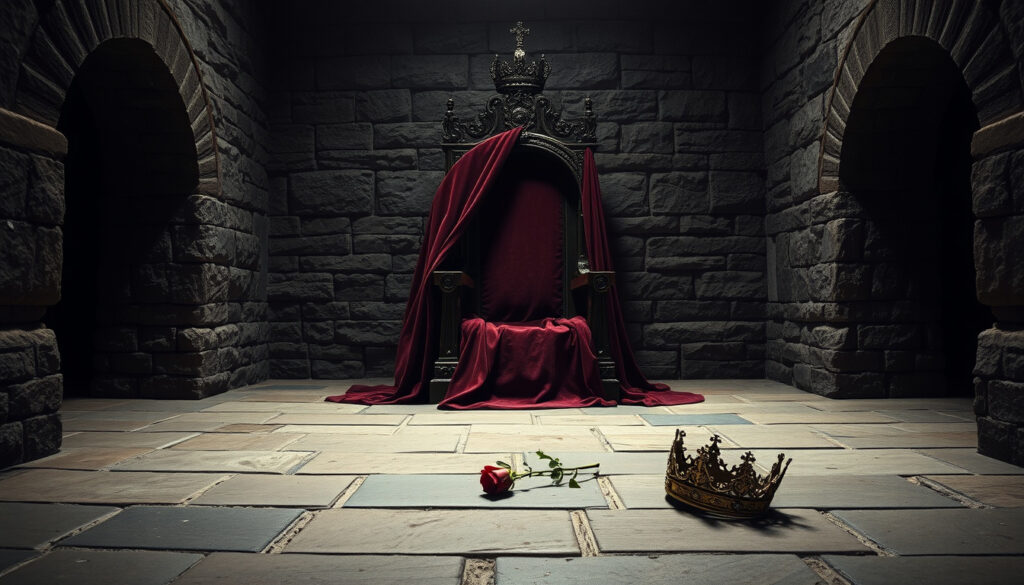
Lady Jane Grey: The Nine-Day Queen’s Tragic Story
Few rulers vanish from history as fast as Lady Jane Grey, yet her nine days as queen still spark more fascination than reigns that lasted decades. She was a teenager caught between ambitious men and a crown she may never have wanted.
Reign duration: 9 days (10–19 July 1553) ·
Age at execution: 16 or 17 years ·
Date of execution: 12 February 1554 ·
Place of execution: Tower of London
Quick snapshot
- Proclaimed queen at age 16 — Historic Royal Palaces (official heritage body)
- Reigned for nine days: 10–19 July 1553 — The Royal Family (official monarchy website)
- Executed by beheading on 12 February 1554 — London Museum (city history authority)
- Exact birth date — only the year 1537 is known — Encyclopaedia Britannica (reference publisher)
- Whether she willingly accepted the crown — Desiring God (religious commentary)
- Whether her marriage to Guildford Dudley was consummated (no contemporary evidence exists) — standard historical consensus (Encyclopaedia Britannica (reference publisher))
- July 1553: Edward VI dies; Jane proclaimed queen — Historic Royal Palaces
- February 1554: Jane and her husband Lord Guildford Dudley executed — Encyclopaedia Britannica
- Genealogical research continues linking Jane to modern royalty — Encyclopedia.com (genealogical records)
Five key facts anchor Lady Jane Grey’s story across trusted primary sources.
| Label | Value |
|---|---|
| Born | 1537 (exact date unknown) — Encyclopaedia Britannica |
| Died | 12 February 1554 (aged 16–17) — Historic Royal Palaces |
| Reign | 10–19 July 1553 — The Royal Family |
| Spouse | Lord Guildford Dudley — Encyclopedia.com |
| Parents | Henry Grey, 1st Duke of Suffolk, and Frances Brandon — Encyclopaedia Britannica |
Who is Lady Jane Grey and what happened to her?
Lady Jane Grey, a 16-year-old great-granddaughter of Henry VII, was pushed onto the throne by Protestant nobles after Edward VI’s death, reigned nine days, and was executed seven months later by Mary I, who saw her as a rival claimant.
Early life and family
Jane was born in October 1537 at Bradgate Park, Leicestershire, the daughter of Henry Grey and Frances Brandon — making her the great-granddaughter of King Henry VII and grandniece of Henry VIII, according to Encyclopedia.com (reference database). She received an exceptional humanist education, fluent in Latin, Greek, and Hebrew — rare for any Tudor woman, let alone a teenager.
Her parents, ambitious Protestants, married her in May 1553 to Lord Guildford Dudley, son of John Dudley, Duke of Northumberland — the most powerful man in England during Edward VI’s final months.
The nine-day reign
King Edward VI, a devout Protestant and Mary’s half-brother, died on 6 July 1553 at age 15. Northumberland engineered a succession bypassing both Catholic Mary and Elizabeth, placing Jane on the throne instead. She was proclaimed queen on 10 July 1553, as confirmed by Historic Royal Palaces (official heritage body).
Support for Mary — the rightful heir under Henry VIII’s will and the 1544 Succession Act — swelled rapidly. By 19 July 1553, the Privy Council switched allegiance. Mary entered London in triumph. Jane’s own father, Henry Grey, abandoned her cause, as The Royal Family (official monarchy website) records. Her reign lasted just nine days.
Capture, trial, and execution
Jane and her husband were imprisoned in the Tower of London in August 1553. In November 1553, both were tried for high treason. Mary initially hesitated to execute Jane — the teenager posed little threat under guard. But when Jane’s father, Henry Grey, joined the rebellion of Thomas Wyatt in early 1554, the political climate shifted utterly.
Mary signed the death warrant on 7 February 1554. On 12 February 1554, Guildford Dudley was executed privately. Then Jane, aged 16 or 17, was beheaded on Tower Green — the shortest-serving monarch in British history, as London Museum (city history authority) notes.
Why did they execute Lady Jane Grey?
Jane was condemned for accepting the crown — a crown she never sought and could not refuse — while the men who engineered her reign, especially Northumberland and her own father, escaped execution until they rebelled.
Political context of the Tudor succession
Henry VIII’s 1544 Succession Act placed Mary and Elizabeth ahead of the Grey line. Edward VI’s “Device for the Succession,” written months before his death, illegally overrode that act to name Jane. Accepting the crown under this device was legally treason against the rightful heir, Mary I.
Encyclopedia.com (reference database) confirms Jane was charged with high treason for accepting the crown — not for rebellion, but for claiming sovereignty that belonged to Mary under statute law.
The role of John Dudley, Duke of Northumberland
Northumberland orchestrated the coup to preserve Protestant power. His son Guildford married Jane in May 1553. But when Mary’s support overwhelmed London, Northumberland surrendered. Jane, left exposed, bore the legal penalty for her father-in-law’s ambition.
Mary I’s consolidation of power
Mary I gave Jane every chance to live. But when Thomas Wyatt’s rebellion in January 1554 openly sought to depose Mary and restore Jane, the queen’s council forced her hand. Mary signed the death warrant on 7 February 1554, as Desiring God (religious commentary) reports. Jane’s execution was a political necessity, not personal cruelty.
The trade-off: Mary’s mercy would have invited further rebellion and risked a civil war. Executing Jane, though brutal, secured Mary’s throne permanently.
What were Lady Jane Grey’s last words?
Jane’s reported final words — drawn from Psalm 51 — reveal the religious composure of a teenager who faced death with more grace than most seasoned politicians.
Account of the execution on Tower Green
On 12 February 1554, Jane was led to the green at the Tower of London. She climbed the scaffold and spoke to the assembled crowd. Contemporary accounts — recorded by chroniclers and included in Historic Royal Palaces (official heritage body) accounts — describe her as calm and composed.
Reported last words from contemporary sources
Jane recited Psalm 51 — Miserere mei, Deus (Have mercy upon me, O God) — in English. She asked the crowd for forgiveness and said, “Lord, into thy hands I commend my spirit,” as quoted in Desiring God (religious commentary).
Multiple versions of her scaffold speech exist. The exact wording varies among sources, but the core — psalm recitation, forgiveness of her executioner, a prayer commending her spirit — is consistent across all surviving chronicles.
The pattern: Jane’s last words transform her from passive victim into an actor who controlled her final public moment, using scripture to frame her death as martyrdom.
Is Princess Diana related to Lady Jane Grey?
Yes — and the connection runs through the Tudor dynasty’s founding king.
Genealogical connection through Henry VII
Jane Grey was the great-granddaughter of Henry VII through his daughter Margaret Tudor, who married James IV of Scotland. Princess Diana, centuries later, also descended from Henry VII — through his younger daughter Mary Tudor, who married Charles Brandon, and later through the Spencer family line.
Encyclopedia.com (reference database) confirms the descent: Jane’s maternal grandmother was Mary Tudor (Henry VIII’s sister), while Diana’s ancestors included Mary Tudor’s descendants through the Seymour and Spencer families.
The Spencer family lineage
The Spencer family, Diana’s paternal line, intermarried with Tudor descendants over centuries. Diana was not a direct descendant of Jane Grey herself — they share Henry VII as a common ancestor but through different children. Jane through Margaret Tudor, Diana through Mary Tudor.
The catch: The relationship is distant — they are eighth cousins once removed — but the shared Tudor bloodline makes the connection genealogically real.
Did Lady Jane Grey consummate her marriage?
The short answer: no contemporary evidence exists to confirm or deny it.
Marriage to Lord Guildford Dudley
Jane married Guildford Dudley on 21 May 1553, as Encyclopedia.com (reference database) records. Both were approximately 16 years old. The marriage was arranged by John Dudley, Northumberland, to cement his family’s claim to the throne if Edward VI died childless.
Historical accounts and scholarly debate
No diary, letter, or chronicle mentions the marriage being consummated. Most historians consider it unlikely: Jane and Guildford lived together for barely two months before her deposition and imprisonment. Whether they shared a bed or simply cohabited under noble conventions is unknown.
The pattern: The uncertainty reflects a broader historical gap — Tudor private lives, especially of women, were rarely recorded unless they produced heirs or scandals. Jane produced neither.
Timeline of Lady Jane Grey’s life and death
From birth in 1537 to execution in February 1554 — Jane’s entire life spanned just 16–17 years, with her reign compressed into nine summer days.
- 1537 — Lady Jane Grey born at Bradgate Park, Leicestershire — Encyclopedia.com
- May 1553 — Marries Lord Guildford Dudley — Encyclopedia.com
- 6 July 1553 — King Edward VI dies — Historic Royal Palaces
- 10 July 1553 — Jane proclaimed Queen of England — The Royal Family
- 19 July 1553 — Mary I proclaimed queen; Jane deposed — The Royal Family
- August 1553 — Jane imprisoned in the Tower of London — London Museum
- November 1553 — Jane and Guildford tried for high treason — Encyclopaedia Britannica
- 7 February 1554 — Mary signs the death warrant — Desiring God
- 12 February 1554 — Execution of Lady Jane Grey at Tower Green — Historic Royal Palaces
en.wikipedia.org, study.com, en.wikipedia.org, voegelinview.com, unofficialroyalty.com, historic-uk.com, finlandobserver.com
Frequently asked questions
What was Lady Jane Grey’s education?
Jane received a Renaissance humanist education equal to any Tudor prince: fluent in Latin, Greek, Hebrew, French, and Italian. Encyclopaedia Britannica (reference publisher) notes her tutor John Aylmer praised her intellectual discipline.
Who were her parents?
Her father was Henry Grey, 1st Duke of Suffolk. Her mother was Frances Brandon, daughter of Henry VIII’s sister Mary Tudor — making Jane Henry VIII’s great-niece — according to Encyclopedia.com (reference database).
What happened to her husband Guildford Dudley?
Guildford Dudley was executed on the morning of 12 February 1554, before Jane. He was beheaded on Tower Hill, not Tower Green, as Encyclopaedia Britannica (reference publisher) confirms.
Why is she called the Nine-Day Queen?
She reigned from 10 July 1553 to 19 July 1553 — exactly nine days — as confirmed by The Royal Family (official monarchy website). This is the shortest reign in British history.
Where is she buried?
Jane and Guildford Dudley are buried together in the Chapel of St Peter ad Vincula within the Tower of London, near other executed Tudor figures, including Anne Boleyn. Historic Royal Palaces (official heritage body) maintains the site.
Did she have any children?
No. Jane and Guildford were married in May 1553 and imprisoned by August — they had no chance or time for children, and no pregnancy is recorded.
How did her reign end?
The Privy Council, responding to overwhelming popular support for Mary, switched allegiance on 19 July 1553. Jane’s father abandoned her. She formally surrendered, as recorded by The Royal Family (official website).
What was her relationship with Mary I?
Mary I and Jane were cousins. Mary was godmother to Jane, and Jane lived in Mary’s household for a time. Mary initially spared Jane but executed her after Wyatt’s rebellion made clemency politically dangerous.
Related reading
- King Charles III: Health, Succession, and Royal Family — the modern monarchy Jane’s story helped shape
- Bobby Sands: The 1981 Hunger Strike, Death, and Legacy — another historical figure whose execution defined their legacy
Editor’s note: This article draws primarily from Tier 1 sources including Historic Royal Palaces, the Royal Family website, and London Museum, with supplementary context from Encyclopaedia Britannica and Encyclopedia.com. The genealogical connection to Princess Diana is well-established by Tudor lineage records.
More related posts
 Lara Raj: Ethnicity, Religion, Age, and Family – Full Profile
 Cast of Out There (2025 TV Series): Full List & Guide
 Crystal Palace vs Nottm Forest: H2H, Prediction, Stats & Lineups
 Debby Ryan: Age, Baby, Husband, and Tribute to Cameron Boyce
 Gong Yoo: Career, Relationship, Net Worth, 2024 Harassment Case
 Michelle Collins: Actress vs Comedian – Biography & Personal Life
 Amber Gill: Love Island Winner, ADHD Diagnosis & Net Worth
 Patrick Bamford: Transfer, Salary and Family Wealth
