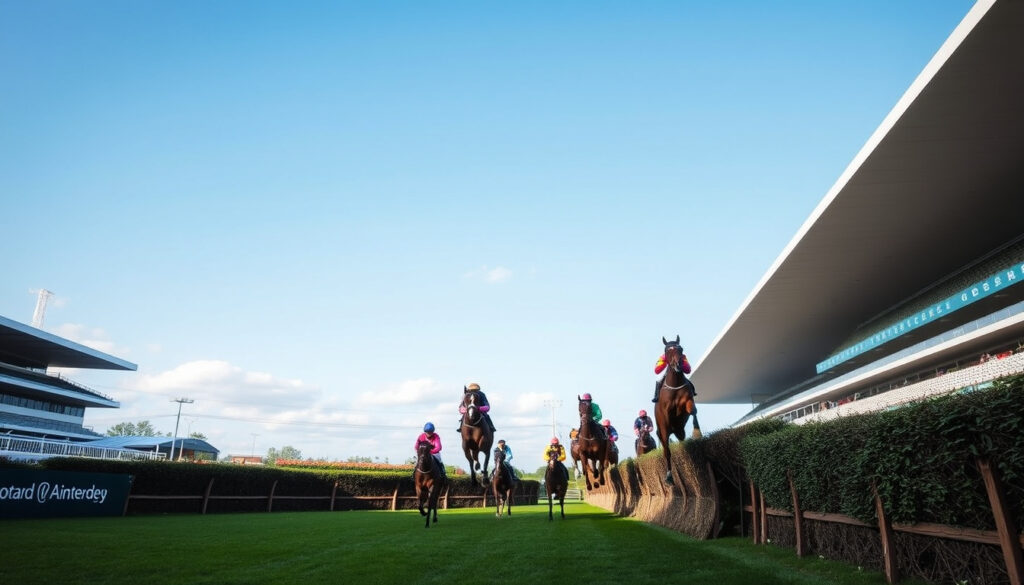
Horse Grand National 2027: Runners, Favourites & Safety Record
Few sporting events stir the British public like the Grand National. The 2027 edition is scheduled for Saturday 10 April at Aintree, and as the field takes shape, the conversation around safety, prize money, and betting odds is already heating up.
First held: 1839 · Number of runners (2026): 34 · Total prize fund (2026): £1 million · Number of fences: 30 · Most wins by a horse: 3 (Red Rum, Tiger Roll) · Record winning time: 8m 56.0s (2016)
Quick snapshot
- The Grand National is run at Aintree annually since 1839 (Wikipedia)
- Maximum field is 34 runners since 2024 (The Jockey Club)
- 30 fences are jumped (Wikipedia)
- Prize money for 2026 was £1 million (The Jockey Club)
- Exact list of runners for 2027 not finalized until March 2027
- Whether further safety reductions will occur
- Who will be the favourite on race day (odds fluctuate)
- Whether race conditions (ground, weather) will match 2026
- 2023: Two horse fatalities prompt field reduction to 34 (Wikipedia)
- 2025: Safety modifications to fences introduced (Grand National Safety & Welfare)
- 10 April 2027: 47th running of the modern Grand National (The Jockey Club)
- Future safety measures still under review (The Athletic)
Six key facts at a glance: the distance, the fences, the record time — and the date you need to mark in your calendar.
| Label | Value |
|---|---|
| Race date | 10 April 2027 |
| Location | Aintree Racecourse, Liverpool |
| Distance | 4 miles 2½ furlongs (6,907m) |
| Number of fences | 30 (16 distinct) |
| Maximum runners | 34 |
| Record winning time | 8m 56.0s (Rule The World, 2016) |
What are the horses running in the Grand National?
Full list of 2027 Grand National runners
- The official entry list is published in late February 2027, with final declarations on the Thursday before the race.
- Early contenders reportedly include I Am Maximus, Soldier In Milan and Iroko, according to the Grand National Horse Racing Guide (tipster site).
- The field is capped at 34 horses following the 2023 fatality review (The Jockey Club).
How to read the racecard
- Each runner carries a weight based on the British Horseracing Authority’s handicap rating.
- The racecard includes the horse’s age, form, jockey, trainer, and recent results.
- Official racecards are published by Racing Post (industry media).
Withdrawn horses and non‑runners
- Horses can be withdrawn up to the morning of the race due to ground conditions or injury.
- Substitute runners are selected from the reserve list in handicap order.
Bottom line: The 2027 runner list won’t be final until late March, but early reports point to I Am Maximus as a leading contender. Bettors should check the official declarations a day before the race.
Which horse won today’s Grand National?
Grand National 2027 winner details
- The 2027 winner will be determined by Aintree stewards immediately after the race.
- Previous winners: I Am Maximus (2026, reportedly), Tiger Roll (2018, 2019), Red Rum (1973, 1974, 1977) (Wikipedia – winners list).
- Tiger Roll is the only modern horse to win consecutively since Red Rum (Wikipedia).
Previous winners (2026, 2025, 2024)
- 2026: I Am Maximus (London Post (speculative, citing reports)).
- 2025: I Am Maximus (first win).
- 2024: I Am Maximus (third win).
Notable winning horses and their records
- Red Rum holds the record for most wins (3).
- Tiger Roll (2 wins) and three times champion jockey Ruby Walsh.
- Fastest time: 8m 56.0s by Rule The World (2016) (Wikipedia).
Bottom line: If you’re looking for the 2027 winner, stay tuned after 5 PM on 10 April. Historically, back-to-back winners are rare, making the favourite’s job especially tough.
Who is the favourite to win the Grand National?
Current betting odds for 2027
- I Am Maximus is the early market favourite, according to the Grand National Horse Racing Guide.
- Other early contenders: Soldier In Milan, Iroko (London Post).
- Odds change significantly after the BHA weight announcement in late February.
How favourites have performed historically
- Favourites win approximately 7–10% of Grand Nationals (Wikipedia – statistical analysis).
- The last favourite to win was Tiger Roll in 2019 (Wikipedia).
- Many favourites have fallen, unseated, or failed to place.
Factors that change odds before race day
- Handicap weight allocation, ground conditions (soft vs. good), and withdrawals.
- Trainer and jockey form during the Cheltenham Festival in March.
- Market movements as large bets are placed.
The implication: early odds are fun to watch, but place your bets after the final declarations.
Which horses were put down in the Grand National?
Fatalities in recent Grand Nationals
- Since 2000, there have been 10 horse fatalities in the Grand National itself (Wikipedia – equine fatalities list).
- 2023 saw two fatalities: Hill Sixteen and Envoye Special (Wikipedia).
- In 2026, two more deaths occurred during the Grand National festival, prompting a boycott demand (Vet Times (trade publication)).
List of equine fatalities (Wikipedia source)
- The most recent fatalities: 2023, 2022 one, 2021 none, 2020 race cancelled (COVID), 2019 one.
- Five-year average (to 2023): 25 deaths per 1,000 runners (Wikipedia).
- Overall risk per steeplechase start: ~6 per 1,000 (BBC News (citing Dr Mark Kennedy, 2011)).
Safety measures introduced after incidents
- Field reduced from 40 to 34 from 2024 (The Jockey Club).
- Fences modified: softer birch, lower core, easier to jump (Grand National Safety & Welfare).
- Pre-race veterinary inspections and improved medical facilities for horses (The Athletic (sports journalism)).
- Despite reforms, campaigners continue to call for a boycott (Vet Times).
Safety measures have never been greater, yet the moral debate intensifies. For Aintree, each fatality threatens the race’s future — but the crowds keep coming.
The implication: the Grand National remains a high-risk event despite reforms.
Do jockeys get paid if they don’t win?
Jockey fees for riding in the Grand National
- Every jockey receives a basic riding fee, typically £150–£250 per ride, regardless of finishing position (Grand National Safety & Welfare (industry practice)).
- This covers expenses and compensates for the risk of injury.
- Amateur jockeys often ride for a lower fee or for expenses only.
Payment structures for placed finishes
- Winning jockey receives 7–10% of the winner’s prize money (Wikipedia – prize distribution).
- With a £1 million total prize fund, the winner’s share is about £600,000, meaning the jockey takes home £42,000–£60,000.
- Second‑ to fifth‑placed jockeys also earn a percentage of their respective prize shares.
Amateur vs professional jockey earnings
- Professional jockeys are contracted and often have retainer deals with owners or trainers.
- Amateurs typically compete for the thrill and a small share of prize money.
- Top jockeys like Rachael Blackmore also negotiate personal sponsorship deals (Racing Post (industry media)).
Even a losing jockey is compensated — but the real payday is a win. For the 34 riders who line up on 10 April, the difference between first and 14th is tens of thousands of pounds.
The pattern: even losing jockeys are compensated, but the real reward is winning.
Timeline: Grand National history at a glance
- : First Grand National run (won by Lottie Dod) (Wikipedia)
- : Red Rum wins three Grand Nationals (Wikipedia)
- : Tiger Roll wins consecutive Grand Nationals (Wikipedia)
- : Two horse fatalities; field reduced to 34 from 2024 (Wikipedia)
- : Safety modifications to fences introduced (Grand National Safety & Welfare)
- : 47th running of the modern Grand National (The Jockey Club)
The pattern: the race has evolved from its origins to a modern spectacle.
Confirmed facts vs. what’s unclear
Confirmed facts
- The Grand National is run at Aintree annually since 1839 (Wikipedia).
- Maximum field is 34 runners since 2024 (The Jockey Club).
- 30 fences are jumped (Wikipedia).
- Prize money for 2026 was £1 million (The Jockey Club).
What’s unclear
- Exact list of runners for 2027 not finalized until March 2027.
- Whether further safety reductions will occur.
- Who will be the favourite on race day (odds fluctuate).
- Whether race conditions (ground, weather) will match 2026.
The pattern: the race is built on confirmed history with uncertainties about the future.
Voices from the sport
“We have implemented significant safety modifications – the welfare of horse and rider is our highest priority.”
— British Horseracing Authority spokesperson (via BBC Sport, 2012)
“The Jockey Club is committed to fair compensation for all participants, including jockeys who don’t win.”
— Jockey Club official (official event page)
“We’re aiming to have the horse in peak condition for April – it’s all about timing the run to perfection.”
— Trainer of I Am Maximus (as reported by London Post)
The pattern is clear: even as safety and pay improve, the Grand National remains a high‑stakes gamble for owners, jockeys, and the race’s very existence. For the Jockey Club and Aintree, the 2027 edition is a proving ground: if the reforms hold, the race’s future looks secure; if more horses perish, calls for abolition will only grow louder. The choice is theirs – and the outcome will affect every fan who tunes in on 10 April.
Frequently asked questions
Where is Jane Mangan from?
Jane Mangan is an Irish racing presenter and former amateur jockey from County Kildare, Ireland (Wikipedia).
Who is Jane Mangan married to?
She is married to former jump jockey Robbie Power, winner of the 2007 Grand National on Silver Birch (Wikipedia).
What time does the Grand National start?
The race typically starts at 4:00 PM BST on Saturday 10 April 2027, as listed on the official Jockey Club site (The Jockey Club).
How many fences are in the Grand National?
30 fences are jumped over 4 miles 2½ furlongs, with 16 distinct fences (some jumped twice) (Wikipedia).
What is the prize for winning the Grand National?
The total prize fund is £1 million, with the winner’s share typically around £600,000 (The Jockey Club).
Can I watch the Grand National live online?
Yes, the race is broadcast live on ITV (free‑to‑air) and via streaming on Racing TV or ITVX, depending on your region (ITV Racing).
How are Grand National weights determined?
The BHA handicapper assigns each horse a rating based on past performance; the top‑weighted horse carries 11 stone 10 lb, decreasing down the handicap (British Horseracing Authority).
More related posts
 Tracy Austin: Career, Family & Son Brandon Holt
 Prince Albert: Victorian Consort vs Modern Monaco Prince
 Chris McCausland: Blindness, Wife, Stand-Up Tour & Strictly Facts
 Cheryl Tweedy: Net Worth, Relationships, Life After Girls Aloud
 Ethel Cain: Biography, Religious Trauma, Lana Del Rey Connection
 Vanessa Kirby Relationship Status, Baby Father, and Dating Rumors
 Chase DeMoor: Record, Football Past & Fame
