Tate St Ives: Visitor Guide, Tickets & History
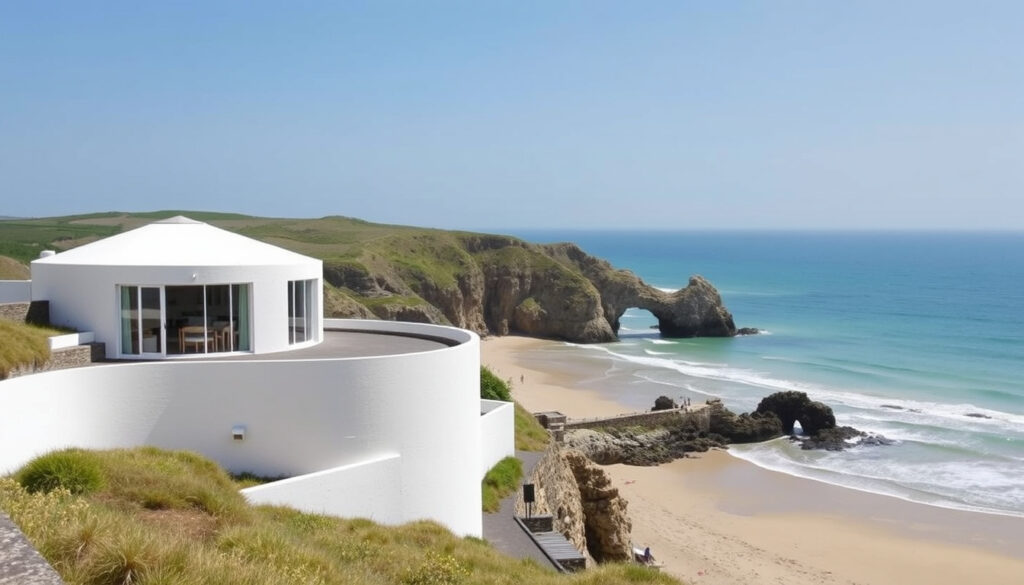
There aren’t many art galleries where you can gaze at a painting and then glance up at the Atlantic Ocean rolling onto Porthmeor Beach. Tate St Ives, perched on the Cornish coast, has been doing exactly that since 1993, with works by Barbara Hepworth, Naum Gabo, and Patrick Heron and a rotating program of contemporary exhibitions.
Year opened: 1993 (Tate) ·
Location: St Ives, Cornwall, England ·
Adult admission (2025): £15.50 with donation (free for Members & under 18s)
Quick snapshot
- Adult: £15.50 (with donation) / £14 (without)
- Free for Members and under 18s
- Locals Pass available for Cornwall residents
- Modern British art collection
- Rotating contemporary exhibitions
- Sea-view galleries
- Book tickets online in advance
- Allow 1–2 hours for the gallery
- Combine with Barbara Hepworth Museum
| Detail | Value | Source |
|---|---|---|
| Opened | 1993 | Tate official site |
| Architect (extension) | Jamie Fobert Architects | Tate (see above) |
| Collection focus | Modern British artists linked to St Ives | Tate |
| Notable artists | Barbara Hepworth, Naum Gabo, Patrick Heron | Tate |
| Annual visitors (approx.) | 250,000 | Wikipedia |
| Adult admission (2025) | £15.50 (with donation) | Tate |
Is it worth visiting Tate St Ives?
What makes Tate St Ives unique?
- Location on Porthmeor Beach with Atlantic views
- Exhibits work by St Ives School artists like Hepworth, Gabo, and Heron
- Rotating contemporary exhibitions from emerging and established artists
The gallery’s permanent collection draws heavily from the St Ives School — a group of artists who moved to this fishing town between the 1920s and 1940s. The building itself, redesigned and expanded in 2017 by Jamie Fobert Architects, adds 1,320 sq m of gallery space with daylight filtered through sea-facing windows. For anyone who loves modern British art, the answer is a solid yes.
How long should you spend there?
Most visitors spend between one and two hours inside the gallery. If you add a stop at the Barbara Hepworth Museum and Sculpture Garden — a 10-minute walk away — plan for half a day.
You get a concentrated dose of 20th-century British art that you won’t find in any other UK gallery. But the small size means the permanent collection can be seen in a single visit — it’s the temporary shows that give repeat visitors a reason to return.
Is the Tate in St Ives free?
Who gets free entry?
- All visitors aged 18 and under
- Tate Members (unlimited free entry without booking)
- Locals Pass holders (Cornwall residents, reduced annual fee)
Tate St Ives is not free for the general adult public. Standard admission is £15.50 with a voluntary donation, or £14 without. Concessions (over 60s, students, disabled visitors) pay £14.50 with donation or £13 without. There are no regular free-entry days, unlike some other UK museums.
Are there free days?
The Tate does not currently advertise free open days for the St Ives branch. However, if you are a UK resident who holds a Tate Membership (£75/year) or a National Art Pass (offers 50% off admission at certain times), the cost per visit can drop significantly. The best value for locals remains the Locals Pass — a discounted annual ticket for Cornwall residents.
Why is there a Tate in St Ives?
What is the history of Tate St Ives?
- St Ives became a hub for modern British artists in the 1920s–1940s (Wikipedia)
- Artists including Ben Nicholson and Barbara Hepworth moved to the area
- Tate St Ives opened in 1993 to showcase this legacy
The short answer is the St Ives art colony. In the 1920s, a wave of avant-garde artists settled in this remote Cornish town, attracted by the quality of light and the low cost of living. By the 1940s, figures like Barbara Hepworth, Ben Nicholson, and Naum Gabo had made St Ives a serious center for modernism. The Tate opened its St Ives outpost in 1993 to preserve and display that heritage.
How did the St Ives art colony develop?
The colony was never a single movement — it was more a loose network of artists who shared the same coastal studio spaces. Hepworth settled at Barnoon Hill (now the site of her museum) in 1949. Bernard Leach opened his pottery in 1920. The Penwith Society of Arts, founded in 1949, provided a formal structure. Today, the Tate St Ives and the Barbara Hepworth Museum are the two main institutional anchors of that legacy.
Without the St Ives colony, much of Britain’s mid-century abstract art would lack a permanent home. The Tate’s presence ensures that these works remain in the place that inspired them — and accessible to the public.
What can you see at Tate St Ives?
Permanent collection highlights
- Barbara Hepworth: sculptures and drawings
- Naum Gabo: constructivist works
- Patrick Heron: abstract paintings inspired by the Cornish landscape
- Marlow Moss: early abstract compositions
The permanent collection is relatively small but carefully curated. You’ll find works by Hepworth, Gabo, Heron, Moss, and other artists who lived and worked in West Cornwall. The gallery also holds works by younger British artists who continue the region’s abstract tradition.
Current and past exhibitions
Tate St Ives runs two to three temporary exhibitions each year, often focused on contemporary British art or thematic shows that connect history to the present. The gallery’s exhibition program leans toward thought-provoking, sometimes political work — not just the pastels-and-seascapes some visitors expect. Check the Tate website for current listings.
Architecture and views
The building, built into the cliffside, offers panoramic windows overlooking Porthmeor Beach. The 2015–2017 extension by Jamie Fobert Architects added a new gallery wing, a café with that view, and improved accessibility. The architecture itself is a reason to visit — a concrete-and-glass box that feels both brutalist and light.
What is the best time to visit Tate St Ives?
Seasonal considerations
- Summer (June–August): busiest, queues likely; book ahead
- Spring and autumn: milder weather, fewer crowds
- Winter (November–February): reduced hours, but quiet and atmospheric
The gallery is open year-round, but hours change with the season. From March to October it opens daily 10:00–17:20 (last admission 17:00). From November to February it opens Tuesday–Sunday 10:00–16:20 (last admission 16:00) (Art Fund). It is closed on Christmas Eve, Christmas Day, Boxing Day, and New Year’s Day.
Crowd levels
Summer months see the highest visitor numbers, especially on weekends and school holidays. Winter is the quietest time — you may have the galleries almost to yourself on a weekday. The Barbara Hepworth Museum, which has a garden, is more enjoyable in fine weather.
Opening hours
Standard hours: 10:00–17:20 (March–October) / 10:00–16:20 (November–February). Always check the official Tate St Ives page before traveling, as hours can change for holidays or special events.
Pros and cons of visiting Tate St Ives
Upsides
- Unique seaside location with Atlantic views
- High-quality collection of British modernism
- Rotating exhibitions keep it fresh
- Free for young people and Members
- Well-designed building with good accessibility
Downsides
- Admission is not free for adults
- Relatively small permanent collection
- Can be very crowded in summer
- Limited parking in St Ives
- Reduced winter hours
Timeline of Tate St Ives
- 1920s–1940s: Artists including Ben Nicholson and Barbara Hepworth move to St Ives, forming a thriving art colony (Wikipedia)
- 1993: Tate St Ives opens to the public
- 2015–2017: Major extension by Jamie Fobert Architects adds 1,320 sq m of space
- 2025: Continues to host rotating exhibitions of modern and contemporary art
What we know and what’s unclear
Confirmed facts
- Tate St Ives opened in 1993
- Adult admission is £15.50 with donation, £14 without
- Free for Members and under 18s
- Exhibits work by Barbara Hepworth, Marlow Moss, Naum Gabo, Patrick Heron
- Building designed by Jamie Fobert Architects with 1,320 sq m extension
What’s unclear
- Exact annual visitor numbers (estimates vary around 250,000)
- Future exhibition schedule beyond the current year
What others say
“Tate St Ives has been a beacon for modern art in Cornwall since 1993, drawing visitors from across the UK to see its world-class collection and spectacular coastal setting.”
— Tate St Ives official site
“The gallery’s extension, completed in 2017, added significant new gallery space and improved visitor facilities, cementing its role as a major cultural destination in the South West.”
— Wikipedia entry for Tate St Ives
Summary
Tate St Ives succeeds in being both a local cultural hub and a national art institution. For Cornwall residents, it offers discounted access and a rotating program that keeps the modern art conversation alive year-round. For visitors from outside the region, it’s a compelling reason to venture beyond the beaches. The trade-off is clear: you get a concentrated, high-quality collection in a breathtaking setting, but you pay for the privilege — unless you’re a Member or under 18. Plan ahead, book online, and pair it with the Barbara Hepworth Museum for the full St Ives art experience. Visitors who skip the advance booking risk queues and limited availability in peak season.
choosewhere.com, appforcornwall.com, bestdaysoutcornwall.co.uk, tripadvisor.com, tate.org.uk, norgescasino.org
Frequently asked questions
How do I get to Tate St Ives by public transport?
Take the train to St Ives station (from St Erth or Penzance). From the station it’s a 15-minute walk along the coast. A shuttle bus runs year-round from the Trenwith Coach and Car Park to the town centre, a five-minute walk from the gallery.
Is there parking near Tate St Ives?
Parking in St Ives is limited, especially in summer. The Trenwith Coach and Car Park offers a shuttle bus, and a seasonal train park-and-ride runs from St Erth and Lelant Saltings stations (end of May to end of September).
Can I take photos inside Tate St Ives?
Photography is permitted in the permanent collection galleries for personal use, but flash, tripods, and selfie sticks are not allowed. Some temporary exhibitions may have restrictions — check signage or ask staff.
Are there guided tours at Tate St Ives?
Yes, the gallery offers free guided tours of the collection on certain days. Audio guides are also available. Check the Tate website for current tour times.
Is Tate St Ives wheelchair accessible?
Yes, the gallery is fully wheelchair accessible, with lifts to all floors and accessible toilets. The Barbara Hepworth Museum has limited accessibility due to its historic garden setting. Contact Tate in advance for detailed access information.
What other attractions are near Tate St Ives?
The Barbara Hepworth Museum and Sculpture Garden is a 10-minute walk away. Other nearby attractions include the Penlee House Gallery & Museum in Penzance, the St Ives Theatre, and numerous beaches: Porthmeor, Porthgwidden, and Carbis Bay.
Can I buy Tate St Ives tickets online?
Yes, advanced booking is strongly encouraged. A limited number of tickets are available on the door, but booking online guarantees entry and is cheaper in some cases. Purchase tickets on the Tate website.
More related posts
 Huw Jones Transfer to Toulon: Career, Stats, and Heritage
 Susan Tully: What Happened to the EastEnders Star
 Carrie Fisher’s Cause of Death and Harrison Ford’s Reaction
 Laurence Rickard: Biography, Career & Personal Life
 Gustavo Hamer: Salary, Adoption, Transfer & 2025 Stats
 Plantation Shutters: Cost, Downsides, and Style in 2026 (Ireland)
 Joanna Higson: Actress, Age, TV Shows & Career
 Louise Brealey: Biography, Age, Nationality, and Key Roles
