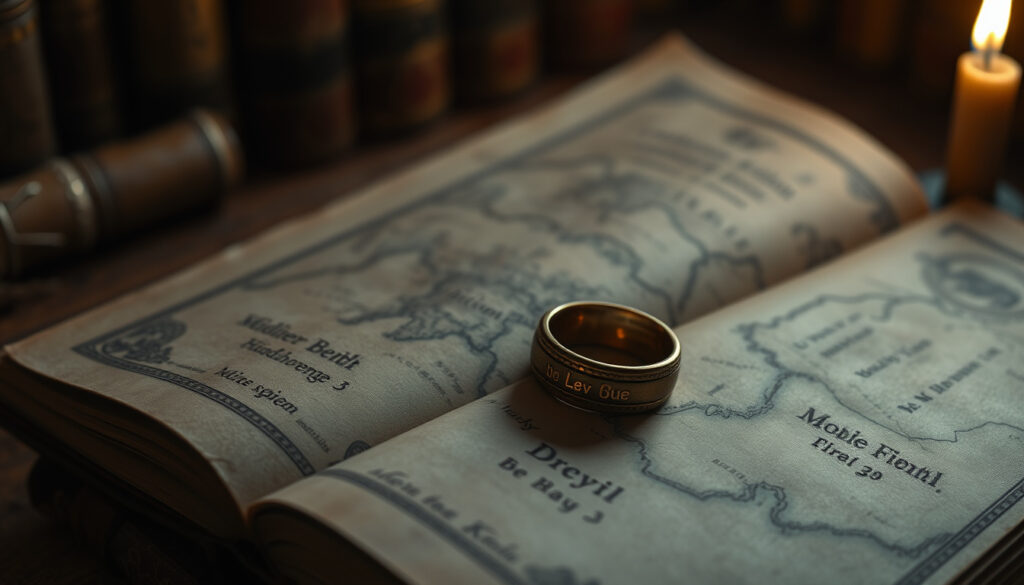
Frodo Baggins: Character Analysis, Relationships, and Key Facts
There aren’t many authors who can name their greatest creation and have it stick, but J.R.R. Tolkien’s Frodo Baggins has a claim to that title. A hobbit of the Shire, Frodo inherited the One Ring from his uncle Bilbo Baggins and carried it to the fires of Mount Doom.
Portrayed by: Elijah Wood ·
Age at start of quest: 50 ·
Home: The Shire ·
Known for: Ringbearer ·
Author: J.R.R. Tolkien
Quick snapshot
- Frodo was a hobbit of the Shire (Wikipedia (open encyclopedia))
- He carried the One Ring to Mount Doom (Audible (Tolkien blog))
- He never married (Hall of Beorn (reference))
- He left Middle-earth for the Undying Lands (Britannica (reference publisher))
- The exact nature of his bond with Samwise Gamgee (interpreted as romantic by some readers) (Encyclopedia of Arda (reference work))
- Whether Frodo experienced any romantic attraction at all (Encyclopedia of Arda (reference work))
- Tolkien’s private views on sexuality and its representation in the text (Encyclopedia of Arda (reference work))
- Whether Frodo’s departure to the Undying Lands was permanent or if he could have returned (Encyclopedia of Arda (reference work))
- March 25, TA 3019 — The One Ring destroyed (Wikibooks (study guide))
- Frodo departs from the Grey Havens to the Undying Lands (YouTube (fan analysis))
Six key facts about Frodo, one pattern: his journey moves from ordinary hobbit to mythic hero, then to a figure too wounded to remain in the Shire.
| Attribute | Value |
|---|---|
| Full name | Frodo Baggins |
| Race | Hobbit |
| Born | September 22, 1368 Shire Reckoning (Third Age 2968) |
| Died | Departed Middle-earth to the Undying Lands in 3021 TA |
| Actor | Elijah Wood |
| Book debut | The Fellowship of the Ring (1954) |
What is Frodo Baggins known for?
The Ringbearer
- Frodo was the Ringbearer — he carried the One Ring to Mount Doom (Wikipedia (open encyclopedia)).
- He volunteered at the Council of Elrond to take the Ring to Mordor (The One Wiki to Rule Them All (fan encyclopedia)).
Key role in the War of the Ring
- His quest to destroy the Ring was the central action of the War of the Ring (Britannica (reference publisher)).
- Frodo is widely treated as the primary protagonist of The Lord of the Rings (Wikibooks (study guide)).
Occupation and daily life before the quest
- Before inheriting the Ring, Frodo lived quietly at Bag End, managing Bilbo’s estate and socializing among the hobbits of Hobbiton (Encyclopedia of Arda (reference work)).
- He was known among the Shirefolk as a gentle, bookish hobbit who enjoyed walking, reading, and the company of Samwise Gamgee (Hall of Beorn (reference)).
Frodo is the hero who fails at the last moment, yet his failure is redeemed by mercy and pity. That paradox is why readers keep returning to his story.
The implication: Frodo’s fame rests not on triumph but on endurance. He is remembered because he carried a burden that would have crushed anyone else.
Who is Frodo to Bilbo?
Nephew and adopted heir
- Frodo is Bilbo’s nephew — son of Drogo Baggins and Primula Brandybuck (Encyclopedia of Arda (reference work)).
- After his parents drowned when he was 12, Bilbo adopted Frodo as his heir and brought him to live at Bag End (The One Wiki to Rule Them All (fan encyclopedia)).
The adoption binds the two hobbits across generations. Frodo inherits not only the ring but also Bilbo’s restlessness — and ultimately his passage to the West.
The pattern: Bilbo gives Frodo home, adventure, and a poisoned gift. The adoption is both a kindness and a sentence.
Did Frodo Baggins ever marry?
Frodo’s marital status
- Frodo never married (Hall of Beorn (reference)).
- Tolkien left him unmarried to emphasize his sacrifice and loss — he is too damaged by the Ring to settle into domestic life.
Tolkien’s reasons
- In letters, Tolkien described Frodo as “a hobbit, and therefore not a hero of the epic type; but he is the chief hero of the story” (Wikipedia (open encyclopedia)).
- His singleness is part of the cost: he saves the Shire but cannot enjoy it.
The catch: Frodo’s celibacy is not just a biographical detail; it is the story’s way of showing that heroism leaves no room for a normal life.
Is Frodo Baggins good or evil?
Moral ambiguity
- Frodo is fundamentally good but struggles with the Ring’s influence (Audible (Tolkien blog)).
- He fails at the end — claiming the Ring for himself — but is redeemed by Gollum’s attack and the mercy shown earlier.
Tolkien’s view
- Tolkien wrote that Frodo is “not a hero of the epic type; but he is the chief hero of the story” (Wikipedia (open encyclopedia)).
- His goodness is a stubborn, ordinary hobbit decency that endures longer than that of the wise or the mighty.
Frodo’s fundamental goodness is what makes the Ring’s corruption so tragic. The reader watches a good person be slowly hollowed out — which is far more powerful than watching a bad one.
What this means: Frodo is not a hero because he destroyed the Ring. He is a hero because he carried it as long as he could, and when he couldn’t, he still deserved grace.
Is Frodo LGBTQ?
Textual evidence
- No explicit indication in the text of same-sex attraction (YouTube (fan analysis)).
- Some readers interpret a close bond with Sam as romantic — the two are inseparable, share deep emotion, and live together after the quest.
Reader interpretations
- Fan discussions on forums frequently explore the Sam-Frodo dynamic as homoerotic.
- The physical affection (holding hands, crying together, Frodo’s jealousy) fuels these readings.
Tolkien’s intent
- Tolkien, a devout Catholic, denied any romantic subtext (Encyclopedia of Arda (reference work)).
- He modelled the friendship on male comradeship from his war experience, not romance.
The implication: The question says more about how modern readers approach texts than about Tolkien’s intentions. Both readings are valid in literary analysis, but the author’s voice is clear.
Timeline
- September 22, 1368 SR (TA 2968) — Frodo Baggins born to Drogo Baggins and Primula Brandybuck (Wikibooks (study guide)).
- TA 3001 — Bilbo’s 111th birthday party; Frodo inherits Bag End and the One Ring (The One Wiki to Rule Them All (fan encyclopedia)).
- September 23, TA 3018 — Frodo leaves Rivendell as part of the Fellowship of the Ring (Britannica (reference publisher)).
- March 25, TA 3019 — The One Ring destroyed in Mount Doom (Wikibooks (study guide)).
- September 29, TA 3021 — Frodo departs from the Grey Havens to the Undying Lands (Hall of Beorn (reference)).
The pattern across these dates: Frodo’s life moves from quiet Shire routine through catastrophic war, then into an exile that is also a healing.
Clarity
Confirmed facts
- Frodo was a hobbit of the Shire (Wikipedia (open encyclopedia)).
- He carried the One Ring to Mount Doom (Audible (Tolkien blog)).
- He never married (Hall of Beorn (reference)).
- He left Middle-earth for the Undying Lands (Britannica (reference publisher)).
What’s unclear
- The exact nature of his bond with Samwise Gamgee (interpreted as romantic by some readers).
- Whether Frodo experienced any romantic attraction at all.
- Tolkien’s private views on sexuality and its representation in the text.
- Whether Frodo’s departure to the Undying Lands was permanent or if he could have returned.
What stands out: the confirmed facts are concrete and documented; the unclear items all orbit questions of emotion and intention that the text leaves deliberately open.
Quotes
“I will take the Ring,” he said, “though I do not know the way.”
— Frodo Baggins to the Council of Elrond, The Fellowship of the Ring, Book II, Chapter 2 (Wikipedia (open encyclopedia))
“Frodo is a hobbit, and therefore not a hero of the epic type; but he is the chief hero of the story.”
— J.R.R. Tolkien, The Letters of J.R.R. Tolkien, Letter 66 (Wikipedia (open encyclopedia))
Both quotes capture the same truth: Frodo’s heroism is defined not by strength but by willingness despite fear.
Summary
Frodo Baggins is not the strongest, wisest, or most valiant character in Tolkien’s world. His legacy rests on endurance, mercy, and the cost of carrying a burden that was never meant for anyone. For readers today, the choice is clear: accept Frodo as a hero of ordinary virtue — the kind that fails and is still forgiven — or dismiss him as a passive victim of plot. Tolkien made him both, and that ambiguity is why he endures.
pure-good-heroes.fandom.com, youtube.com, lotro-wiki.com, tolkien-intheeyesofsirpj.weebly.com, lepointo.fr
For readers seeking a deeper breakdown of his traits and journey, a complete character guide to Frodo Baggins offers additional context on his role in Tolkien’s legendarium.
Frequently asked questions
How old was Frodo when he left the Shire?
Frodo was 50 years old (in hobbit terms) when he left the Shire in TA 3018. He looked much younger because hobbits age slowly (Wikibooks (study guide)).
What is Frodo’s relationship with Samwise Gamgee?
Sam is Frodo’s gardener and closest companion. They share a deep emotional bond that some readers interpret as romantic, but Tolkien described it as friendship (Encyclopedia of Arda (reference work)).
Why did Frodo leave for the Undying Lands?
Frodo was too wounded — physically and spiritually — by the Ring to heal in Middle-earth. He was granted passage to Valinor to find peace (Hall of Beorn (reference)).
What was the name of Frodo’s sword?
Frodo carried a short sword called Sting, which glowed blue when Orcs were near (The One Wiki to Rule Them All (fan encyclopedia)).
Who played Frodo in the movies?
Elijah Wood portrayed Frodo in Peter Jackson’s film trilogy (Wikipedia (open encyclopedia)).
What are the names of Frodo’s parents?
His parents were Drogo Baggins and Primula Brandybuck. They drowned in the Brandywine River when Frodo was 12 (YouTube (fan analysis)).
Did Frodo have any other relatives?
He was a cousin (and later heir) of Bilbo Baggins, and had many relatives among the Tooks and Brandybucks (Wikipedia (open encyclopedia)).
The questions above circle back to the same tension: readers want to place Frodo in a clear box — age, relationship, fate — but the story resists easy labels.
More related posts
 Andrew Scarborough: Actor from Downton Abbey and Emmerdale
 Film 4 TV Guide – Today’s Schedule and Tonight’s 9pm Film
 Spanish Grand Prix 2025: Piastri’s McLaren 1-2 Victory
 UK Local Elections 2025 – Dates, Councils, Seats and Results
 George MacKay: Biography, Wife, Children & Career
 Joanna Scanlan: Biography, Age, Husband, Movies & TV Shows
 Full Suspension Mountain Bike – Best Budget Picks UK
