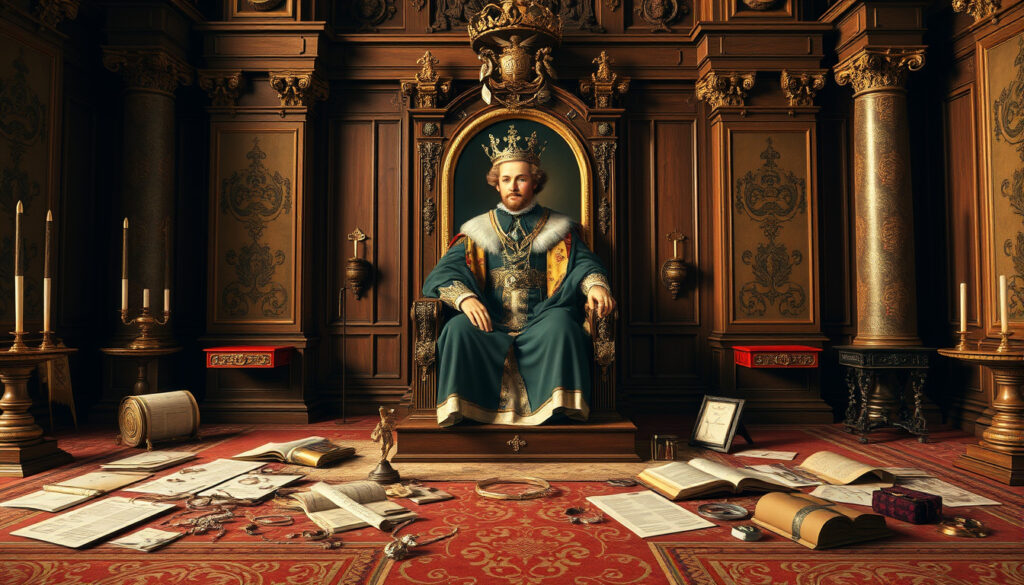
Henry VIII: Biography, Wives, Children, and Legacy
Few monarchs still spark as much curiosity as Henry VIII. His six marriages and the birth of the Church of England transformed a kingdom—but behind the familiar stories lies a more complex picture of a king shaped by ambition, injury, and relentless pain. This article examines the man behind the crown, drawing on contemporary records and modern research to separate fact from legend.
Reign duration: 36 years (1509-1547) ·
Wives: six ·
Children who survived infancy: three ·
Age at coronation: 17 ·
Height: about 6 feet 2 inches
Quick snapshot
- Henry VIII had six wives (Britannica (authoritative encyclopedia))
- He broke with the Roman Catholic Church in 1534 (BBC Bitesize (UK educational platform))
- He reigned from 1509 to 1547 (The Royal Family (official British monarchy website))
- Cause of personality changes after 1536 – possible brain injury (Britannica (authoritative encyclopedia))
- Whether he had syphilis – no medical confirmation (BBC Bitesize (UK educational platform))
- Level of regret over executions of Thomas More and Anne Boleyn (Wikipedia (collaborative encyclopedia))
- 1509 – ascended throne at 17 (The Royal Family)
- 1536 – jousting accident; Anne Boleyn executed (Britannica (authoritative encyclopedia))
- 1547 – died aged 55 (The Royal Family)
- His three surviving children all became monarchs (Britannica (authoritative encyclopedia))
- The Tudor dynasty ended with Elizabeth I in 1603 (The Royal Family)
Seven key facts define Henry VIII’s life: each one marks a hinge point in Tudor history.
| Attribute | Detail |
|---|---|
| Full name | Henry Tudor |
| Born | 28 June 1491 |
| Died | 28 January 1547 |
| Reign | 22 April 1509 – 28 January 1547 |
| Height | 6 feet 2 inches (188 cm) |
| Spouses | six |
| Known for | Six wives, English Reformation, break with papacy |
Why did King Henry VIII go mad?
The question of Henry VIII’s mental state in his later years has fascinated historians for centuries. Several theories compete, each grounded in documented events.
- A severe jousting accident in January 1536 left him unconscious for two hours; some scholars suggest traumatic brain injury caused lasting personality changes (Britannica (authoritative encyclopedia))
- Chronic leg ulcers, probably from a jousting wound, caused constant pain and may have contributed to irritability and paranoia (BBC Bitesize (UK educational platform))
- Some historians have proposed Cushing’s syndrome or even syphilis, but no definitive medical evidence supports either (Wikipedia (collaborative encyclopedia))
The pattern: a vigorous, athletic young king transformed into an obese, volatile ruler after 1536. What this means: the physical and psychological toll of his injuries likely shaped the decisions that defined his reign.
The implication: the lack of definitive medical evidence leaves room for alternative theories.
What is King Henry VIII most famous for?
Henry VIII’s fame rests on three interconnected achievements that reshaped England.
- Break with Rome (1534): After the Pope refused to annul his marriage to Catherine of Aragon, Henry had Parliament pass the Act of Supremacy, declaring himself Supreme Head of the Church of England (BBC Bitesize (UK educational platform))
- Six marriages: In pursuit of a male heir, he married six times, with two wives executed and two divorced (Britannica (authoritative encyclopedia))
- Dissolution of the monasteries (1536-1541): He ordered the closure of hundreds of religious houses, seizing their wealth for the crown (The Royal Family)
The trade-off: Henry never abandoned Catholic doctrine, retaining transubstantiation and most sacraments, even as he severed jurisdictional ties to the Pope (Britannica (authoritative encyclopedia))
What happened to the six wives of Henry VIII?
The fates of Henry’s wives are so well known they’ve become a nursery rhyme – “divorced, beheaded, died; divorced, beheaded, survived.” Here’s the historical record.
- Catherine of Aragon – married 1509, marriage annulled 1533 (Wikipedia (collaborative encyclopedia))
- Anne Boleyn – married 1533, beheaded 1536 (Wikipedia (collaborative encyclopedia))
- Jane Seymour – married 1536, died 1537 shortly after giving birth to Edward (Wikipedia (collaborative encyclopedia))
- Anne of Cleves – married January 1540, annulled July 1540 (Wikipedia (collaborative encyclopedia))
- Catherine Howard – married 1540, beheaded 1542 (Wikipedia (collaborative encyclopedia))
- Catherine Parr – married 1543, survived Henry (Wikipedia (collaborative encyclopedia))
The implication: only one wife, Catherine Parr, outlived him, and only Jane Seymour gave him the son he desperately wanted. For the queens, marriage to Henry was a high-stakes gamble.
Henry’s relentless pursuit of a male heir produced three legitimate children who all became monarchs – yet their reigns were marked by religious turmoil and short durations. The Tudor dynasty, so carefully built, ended with Elizabeth I in 1603.
The pattern: Henry’s marital decisions had lasting consequences for the succession.
Who did King Henry VIII regret killing?
Henry VIII ordered the executions of many figures, but two names appear most often in discussions of possible regret.
- Thomas More – executed on 6 July 1535 for refusing to accept the Act of Supremacy. More had been a close friend and Lord Chancellor (Wikipedia (collaborative encyclopedia))
- Anne Boleyn – beheaded on 19 May 1536 after a trial on trumped-up charges of adultery, incest, and treason. Some historians suggest Henry later expressed remorse, but the evidence is indirect (Britannica (authoritative encyclopedia))
Why this matters: the executions of More and Boleyn show a king willing to eliminate even his closest allies for political or personal reasons. Whether he felt genuine regret – and the historical record is debated – the consequences reshaped the court and the kingdom.
Who were the children of Henry VIII?
Henry VIII had three legitimate children who survived infancy, plus one acknowledged illegitimate son.
- Mary I (1516-1558) – daughter of Catherine of Aragon; reigned 1553-1558 (Britannica (authoritative encyclopedia))
- Elizabeth I (1533-1603) – daughter of Anne Boleyn; reigned 1558-1603 (Britannica (authoritative encyclopedia))
- Edward VI (1537-1553) – son of Jane Seymour; reigned 1547-1553 (The Royal Family)
- Henry FitzRoy (1519-1536) – illegitimate son of Elizabeth Blount; created Duke of Richmond but died childless (Wikipedia (collaborative encyclopedia))
The catch: despite his obsession with a male heir, Henry’s only son Edward died at 15, and his two daughters reigned in starkly different styles – Mary restoring Catholicism, Elizabeth solidifying the Protestant settlement.
Timeline of Henry VIII’s reign
- – Born at Greenwich Palace to Henry VII and Elizabeth of York (The Royal Family)
- – Ascended throne at age 17; married Catherine of Aragon (The Royal Family)
- – Birth of Princess Mary (Britannica (authoritative encyclopedia))
- – Began seeking annulment from Catherine (Britannica (authoritative encyclopedia))
- – Married Anne Boleyn; she gave birth to Elizabeth; excommunicated by Pope (BBC Bitesize (UK educational platform))
- – Act of Supremacy: Henry declared Supreme Head of Church of England (BBC Bitesize (UK educational platform))
- – Anne Boleyn executed; jousting accident; dissolution of monasteries begins (Britannica (authoritative encyclopedia))
- – Married Jane Seymour; she died after childbirth of Edward (Wikipedia (collaborative encyclopedia))
- – Married Anne of Cleves (divorced soon after), then Catherine Howard (Wikipedia (collaborative encyclopedia))
- – Catherine Howard executed (Wikipedia (collaborative encyclopedia))
- – Married Catherine Parr (Wikipedia (collaborative encyclopedia))
- – Died aged 55 (The Royal Family)
The pattern: the timeline reveals a reign of dramatic peaks and valleys.
What We Know and What Remains Unclear
Confirmed facts
- Number of wives: six (Britannica (authoritative encyclopedia))
- Reign dates: 1509-1547 (The Royal Family)
- Execution of Anne Boleyn and Catherine Howard (Wikipedia (collaborative encyclopedia))
- Break from Roman Catholic Church in 1534 (BBC Bitesize (UK educational platform))
- Birth and death dates: 28 June 1491 – 28 January 1547 (The Royal Family)
What’s unclear
- Cause of personality change in later years – possibly brain injury from jousting (Britannica (authoritative encyclopedia))
- Exact nature of injury from 1536 jousting incident (BBC Bitesize (UK educational platform))
- Level of regret over execution of Thomas More and Anne Boleyn (Wikipedia (collaborative encyclopedia))
- Whether Henry had syphilis – not medically confirmed (Wikipedia (collaborative encyclopedia))
The implication: historical certainty is rare in Tudor studies.
Voices from the Tudor Court
“Henry’s obsession with a male heir drove everything. It drove his marriages, his break with Rome, and ultimately the dissolution of the monasteries. Without that drive, Tudor England would have looked very different.”
– English historian David Starkey (Britannica (authoritative encyclopedia))
“Since his fall from his horse, the king has been subject to moods of such blackness that none dare approach him. He speaks of nothing but death and destruction.”
– From a letter by Thomas Cromwell, 1536 (BBC Bitesize (UK educational platform))
“He is extremely stout, and his face is fleshy and of a dark complexion. In his later years he could no longer walk without the aid of a staff, and his leg was constantly suppurating.”
– Venetian ambassador to Henry’s court, 1543 (Britannica (authoritative encyclopedia))
Henry VIII’s legacy is a study in contradictions. He created the Church of England, yet never abandoned Catholic doctrine. He executed two wives and a former friend, yet surrounded himself with brilliant advisers. He desperately wanted a son, yet his son died young and his daughters reigned for decades. For modern readers, the lesson is clear: the man behind the monstrous caricature was driven by pain, ambition, and a terrifying single-mindedness that reshaped a nation. For anyone studying Tudor history, the choice is not to admire or condemn, but to understand the forces that made him – and the consequences that outlived him.
Related reading: Henry VIII biography, six wives, and the English Reformation · Henry VIII’s life and reign
study.com, en.wikipedia.org, youtube.com, youtube.com, ebsco.com, youtube.com, biography.com, mediacanvas.us
Related coverage: full biography of Henry VIII fördjupar bilden av King Henry VIII – Full Biography, Wives, Children & Legacy.
Frequently asked questions
How many children did Henry VIII have?
Henry had three legitimate children who survived infancy: Mary I, Elizabeth I, and Edward VI. He also acknowledged one illegitimate son, Henry FitzRoy.
Why did Henry VIII break with the Roman Catholic Church?
He broke with Rome after the Pope refused to annul his marriage to Catherine of Aragon. The Act of Supremacy (1534) made him head of the Church of England.
What was Henry VIII’s height and weight?
Henry stood about 6 feet 2 inches (188 cm). In his youth he was athletic; by his 50s he was severely obese, with a waist estimated at over 50 inches.
Which wife of Henry VIII had a baby that became king?
Jane Seymour gave birth to the future Edward VI. She died shortly after childbirth.
What happened to Anne Boleyn’s sister Mary?
Mary Boleyn was Anne’s older sister. She served as a mistress to King Francis I of France and, later, possibly to Henry VIII. She married twice and died in 1543.
Was Henry VIII obese?
Yes. In his later years his weight likely exceeded 300 pounds (136 kg). His suits of armor from his youth show a slim man; later armor had to be expanded significantly.
More related posts
 Viktor Gyokeres Transfer News: Arsenal Deal Confirmed
 Gollum Lord of the Rings: Tragic Hobbit & His Transformation
 Billy Monger: Crash, Amputation & F1 Commentator
 Chase DeMoor: Record, Football Past & Fame
 Carrie Fisher’s Cause of Death and Harrison Ford’s Reaction
 The Spy Who Loved Me: Cast, Theme Song, and Legacy (1977)
 Buddy Holly Plane Crash: Cause, Myths, and Wife’s Fate
 Small Double Bed with Mattress: Ireland’s 4ft Bed Guide
