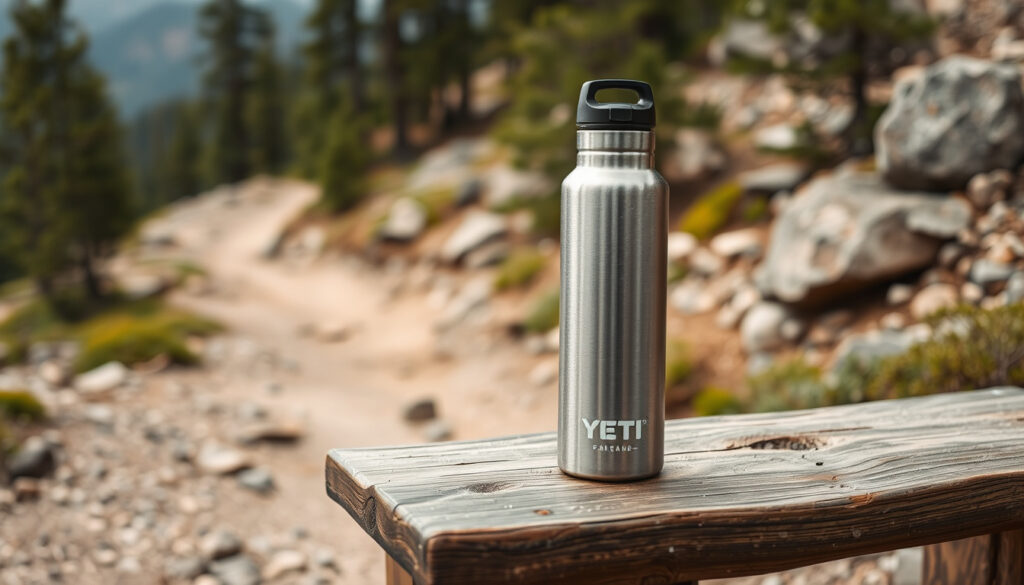
Yeti Water Bottle Review: Is It Worth the Price
Anyone who’s shopped for a reusable water bottle in the past few years has seen the YETI Rambler, and likely wondered what makes it so expensive. We’ve dug into the pricing, compared it with rivals like Stanley and Hydro Flask, and looked at real-world durability to help you decide if the premium is justified.
Price Range: $37 – $130 (depending on size) · Material: 18/8 Stainless Steel · Insulation: Double-wall vacuum insulation · Capacity Options: 18oz, 26oz, 36oz, 46oz, 64oz, 1gal · Leakproof: Yes, with chug cap · BPA-Free: Yes
Quick snapshot
- Made from 18/8 stainless steel (YETI)
- Double-wall vacuum insulated (YETI) (YETI)
- BPA-free (YETI) (YETI)
- Leakproof with chug cap (GearJunkie review)
- Exact ice retention varies by model and external conditions (User reports)
- Long-term durability after years of heavy use is known only from anecdotal reports (User reports)
- Paint chipping frequency is not systematically documented (User reports)
- GearJunkie has featured YETI Rambler in its best-insulated-bottles roundup for multiple years (GearJunkie 2026 roundup)
- YETI continues to release new sizes and lid options, indicating active product development
- YETI recently introduced a 42 oz Straw Mug at a reduced price (YETI store)
- Competitors like Stanley and Hydro Flask are innovating with new lids and colors
- Consumer demand for reusable bottles continues to grow, pressuring prices
Eight key specifications, one pattern: YETI sticks to a premium material set and a simple, robust design that hasn’t changed much over the years.
| Specification | Value |
|---|---|
| Material | 18/8 Stainless Steel (YETI) |
| Leakproof | Yes, with chug cap (YETI) |
| BPA-Free | Yes (YETI) |
| Dishwasher Safe | Yes (YETI Canada) |
| Closure | Chug Cap (standard) (YETI) |
| Sizes | 18oz, 26oz, 36oz, 46oz, 64oz, 1 gallon (YETI store) |
| Insulation | Double-wall vacuum (YETI) |
| Price Range | $37 – $130 (YETI) |
Are Yeti water bottles worth the price?
The short answer depends on how much you value durability and temperature retention. YETI’s smallest 18 oz bottle costs $37, while a comparable Hydro Flask is $26 (GearJunkie price comparison). The premium is about $11 at the entry level, and grows with size.
Why is a Yeti so expensive?
- YETI uses kitchen-grade 18/8 stainless steel with double-wall vacuum insulation, materials that cost more than single-wall or plastic alternatives.
- The brand carries a premium for its reputation and marketing — BottlePro (hydration blog) argues that strong brand demand drives prices higher than competitors with similar build quality.
- Each bottle is designed for rugged, long-term use; GearJunkie calls the Rambler “the bottle we grab when durability matters more than shaving ounces” (GearJunkie 2026 roundup).
What brand is as good as YETI but cheaper?
Hydro Flask is the most direct competitor: its 18 oz bottle is $26, and its 64 oz growler is $55 (GearJunkie). Another strong alternative is the classic Stanley line, which is often priced below YETI for similar insulation performance. Allrecipes ranked the YETI Rambler as “hard to beat for overall performance” but acknowledged the higher price.
For the entry-level buyer, the $11 gap between a YETI and a Hydro Flask may not be justified by a marginal improvement in build. But for someone who drops their bottle on concrete daily, the extra thickness and weld quality of YETI matter.
The pattern is clear: YETI sells a premium experience, not just a bottle. If you need the toughest possible bottle and don’t mind paying for it, the price makes sense. If you’re cost-conscious, Hydro Flask or Stanley deliver nearly the same performance for less.
What is better, a Yeti or a Stanley?
Both brands are established and well-reviewed, but they target slightly different priorities. GearJunkie notes that Stanley is “easier for all-day sipping while driving,” while YETI wins on outright durability (GearJunkie).
Which stays colder longer, Yeti or Stanley?
Independent tests show similar ice retention for both brands — both typically keep ice for 24+ hours. The difference comes down to lid design and mouth feel. YETI’s chug cap is narrow and leakproof, while Stanley’s wider mouth is better for filling and cleaning.
Four models, one comparison: price, insulation, durability, and lid type all matter.
| Feature | YETI Rambler (26 oz) | Stanley Classic (25 oz) | Hydro Flask (24 oz) |
|---|---|---|---|
| Price | $40 (YETI) | $35 (typical retail) | $26 (GearJunkie) |
| Insulation | Double-wall vacuum | Double-wall vacuum | TempShield double-wall vacuum |
| Material | 18/8 stainless steel | 18/8 stainless steel | 18/8 stainless steel |
| Leakproof | Yes (chug cap) | Yes (screw cap) | Yes (screw cap) |
| Weight (empty 26/25/24 oz) | ~1.2 lb | ~1.0 lb | ~0.9 lb |
| Dishwasher Safe | Yes | Yes | Yes |
| Warranty | 5-year limited | Lifetime | Lifetime |
What this means: YETI is the most expensive and heaviest of the three, but it also has the most rugged build. Stanley offers a better value for everyday use, and Hydro Flask is the budget champion without sacrificing core features.
What are the weaknesses of YETI?
Even the most loyal customers admit that YETI bottles have drawbacks. The biggest is the price — BottlePro notes that buying every item in the Rambler line would cost over $1,000. Weight is another common complaint: a 64 oz YETI bottle weighs over 2 pounds empty.
Weight
- The 36 oz Rambler weighs about 1.5 lb, significantly more than a plastic or aluminum bottle of the same capacity.
Price
- YETI’s 18 oz bottle costs $37; a ThermoFlask of similar size costs under $15.
Lid compatibility
- Lids are not interchangeable across all sizes; changing a cap can cost an extra $17–40 (according to Bushlife (Canadian retailer)).
Paint chipping
- User reviews on multiple forums report that the powder-coated finish can chip if the bottle is dropped on rough surfaces.
YETI’s durability is real, but that toughness comes with extra weight and a heavier price tag. For a desk job or light hiking, the added robustness may be overkill.
The trade-off: YETI buyers pay for bulletproof construction, but they also carry and pay for that bulletproofing. If you can accept a slightly heavier bottle, the durability is unmatched.
How long will a Yeti water bottle last?
With normal care, a YETI bottle should last for years. The stainless steel body does not rust, and the lid seals remain effective for a long time. GearJunkie’s review team used a Rambler daily for over a year without any performance drop (GearJunkie). The 5-year limited warranty covers defects, though not normal wear.
How long does ice last in YETI?
YETI claims ice retention of up to 24 hours for most models. Independent user tests report similar results: fill with ice and cold water, and you’ll still have ice cubes after a full day in moderate heat. The double-wall vacuum insulation is the key technology behind this performance.
The implication: a YETI bottle can easily outlast a decade of regular use. The high initial cost is spread over many years, which makes it cheaper in the long run than a $10 bottle that needs replacement every season.
The implication: a YETI bottle can easily outlast a decade of regular use. The high initial cost is spread over many years, which makes it cheaper in the long run than a $10 bottle that needs replacement every season.
Why are Yeti water bottles so good?
The brand’s reputation is built on three pillars: insulation, durability, and design. Each contributes to a bottle that outperforms generic alternatives in real-world use.
Leakproof design
- The chug cap forms a tight seal; GearJunkie’s test confirmed no leaks after shaking and tipping (GearJunkie).
Durable build
- The kitchen-grade stainless steel and thick walls handle drops, dents, and scratches better than most competitors.
Temperature retention
- Keeps cold drinks cold for 24+ hours and hot drinks hot for 6+ hours (based on YETI marketing and user reports).
BPA-free
- All materials meet food-grade safety standards, confirmed by YETI’s own specifications.
For someone who needs a bottle that can survive a construction site or a rocky trail, YETI is the gold standard. The trade-off is weight and cost, but for that niche, there is no better option.
Why this matters: YETI succeeds because it doesn’t compromise on the features that matter most to its target audience. The brand’s premium pricing is a direct reflection of the premium materials and engineering.
Six specifications, one pattern: weight and price are the trade-offs for top-tier durability and insulation.
| Specification | YETI 26 oz | YETI 36 oz | YETI 64 oz |
|---|---|---|---|
| Price | $40 | $50 | $65 |
| Weight (empty) | ~1.0 lb | ~1.5 lb | ~2.1 lb |
| Ice retention (typical) | 24h | 24h+ | 24h+ |
| Material | 18/8 SS | 18/8 SS | 18/8 SS |
| Leakproof | Yes | Yes | Yes |
| Dishwasher Safe | Yes | Yes | Yes |
Confirmed facts
- Made from 18/8 stainless steel
- Double-wall vacuum insulated
- BPA-free
- Leakproof with chug cap
- More expensive than most competitors
What’s unclear
- Exact ice retention time varies by model and external conditions
- Long-term durability after years of heavy use is only anecdotal
- Paint chipping frequency is not systematically documented
- Whether the extra cost delivers measurable benefits for all users
Quotes from the experts
“The YETI Rambler Chug Water Bottle is the bottle we grab when durability matters more than shaving ounces.”
“The YETI Rambler Water Bottle is hard to beat for overall performance, blending durability and functionality.”
— Allrecipes, best insulated water bottles review
“YETI’s biggest drawback is the cost, even while acknowledging strong brand demand.”
— BottlePro, hydration blog analysis
The consensus: YETI is praised for build and insulation but critiqued for its high price. For the serious outdoor user, the investment pays off. For casual users, cheaper alternatives offer 80% of the performance at 60% of the price.
The final verdict: YETI bottles are genuinely good — they keep drinks cold, survive drops, and last for years. But the premium is real, and it’s not justified for everyone. For the everyday commuter or office worker, a Hydro Flask or Stanley provides nearly identical performance for less money. For the construction worker, mountain biker, or anyone who abuses their gear daily, YETI is worth every dollar.
youtube.com, amazon.com, advnture.com, bottlepro.net, reddit.com, hotelisrbija.com
For a detailed breakdown of how these two brands stack up, check out our Yeti vs Stanley comparison.
Frequently asked questions
What sizes do Yeti water bottles come in?
YETI sells the Rambler in 18 oz, 26 oz, 36 oz, 46 oz, 64 oz, and 1 gallon sizes, plus a 42 oz Straw Mug.
Are Yeti water bottles dishwasher safe?
Yes, YETI states that both the bottle and the cap are dishwasher safe (YETI Canada).
What is the best lid for Yeti water bottles?
The standard chug cap is leakproof and easy to clean. YETI also offers a straw cap and a hotshot cap for hot drinks. The best lid depends on your use case.
How to clean a Yeti water bottle?
YETI bottles are dishwasher safe, but hand washing with warm soapy water and a bottle brush is recommended for the lid to maintain the seal.
Do Yeti water bottles fit in standard cup holders?
The 18 oz and 26 oz bottles fit most standard car cup holders. The larger sizes (36 oz and above) are too wide for standard holders.
How long does YETI warranty last?
YETI offers a 5-year limited warranty against manufacturing defects (see YETI’s warranty page for full terms).
Where can I buy a Yeti water bottle in Ireland?
YETI products are available through YETI’s EU site, as well as retailers like Arnotts and GetLocal.ie. Pricing and selection may differ from the US market.
More related posts
 Guy Pearce: Kevin Spacey Allegation, Split, and Net Worth
 Franz Ferdinand: Archduke, Assassination, and the Band
 Joanna Higson: Actress, Age, TV Shows & Career
 Carrie Fisher’s Cause of Death and Harrison Ford’s Reaction
 Sid Vicious: Death, Nancy Spungen, and the Freddie Mercury Encounter
 Short Hair Styles for Women – Best 2025 Cuts by Face Shape
 Katherine Schwarzenegger: Biography, Kids, Net Worth, More
 Best 55 Inch TV – Top Picks for Gaming, Movies and Budget
