London Natural History Museum: Free Entry, Hours & Guide
If you’ve ever watched a child press their nose against a dinosaur skull and forget to blink, you already understand the pull of London’s Natural History Museum. It’s one of those rare spaces where a 25-metre blue whale skeleton feels both humbling and thrilling at the same time — and unlike most major attractions in the capital, getting face-to-face with it costs nothing. The catch: you’re sharing that moment with around five million other visitors a year, and a bit of planning goes a long way.
Free entry: Yes (main galleries) ·
Specimens: 80 million ·
Location: South Kensington, London ·
Opening hours: Daily 10am–5:50pm ·
Most visited UK attraction: Yes
Quick snapshot
- Free main entry (permanent galleries) — Natural History Museum admissions policy
- 80 million specimens on site — Natural History Museum homepage
- Daily 10:00–17:50, last entry 17:30 — NHM official visit page
- Exact real-time queue counts during peak hours
- Precise crowding levels for specific gallery zones
- Current accessibility facility details beyond broad categories
- Jurassic Oceans: Monsters of the Deep opens 22 May 2026 (£15) — Natural History Museum
- Annual closure: 24–26 December (Natural History Museum)
- Book free timed ticket to secure your slot
- Plan 3–4 hours minimum for a satisfying visit
- Catch the new Jurassic Oceans exhibit before it leaves
The table below consolidates the practical details you need for planning your visit, from opening hours to contact information.
| Detail | Information |
|---|---|
| Official Website | www.nhm.ac.uk |
| Address | Cromwell Road, London SW7 5BD |
| Free Entry | Main galleries, yes (temporary exhibitions separate) |
| Specimens | 80 million |
| Annual Visitors | Most visited UK museum |
| Opening Hours | Daily 10:00–17:50 (last entry 17:30) |
| Closure Dates | 24–26 December annually |
| Phone | +44 (0)20 7942 5000 |
Is Natural History Museum London free?
Yes — general admission to the permanent galleries is free. According to the museum’s official admissions policy, admission to the museum and its grounds is free, though the institution may charge for temporary exhibitions and special events. Booking a free timed entry ticket in advance is recommended for the best experience, especially during busy periods, with space reserved for walk-up visitors who may face longer wait times.
The current headline paid exhibition is Jurassic Oceans: Monsters of the Deep, opening 22 May 2026 from £15 per ticket (Natural History Museum members enter free). The permanent displays — including the Hintze Hall blue whale skeleton, the roaring T.rex, and the giant sequoia — remain free with your general admission ticket.
Entry fees for main galleries
- General admission: free (permanent galleries)
- Special exhibitions: charged separately (e.g., Jurassic Oceans from £15)
- Free timed tickets required — book online before visiting
Temporary exhibitions and tickets
The Jurassic Oceans exhibition showcases marine reptiles from the Mesozoic era. At £15 per adult ticket, it sits alongside any seasonal events the museum schedules throughout 2026. Members of the Natural History Museum receive free entry to all paid exhibitions — a benefit worth considering if you live in London or plan multiple visits.
Free tickets availability
Free timed tickets are released regularly on the museum’s website. During off-peak periods, same-day tickets are often available. During school holidays and weekends, demand spikes and tickets sell out faster — sometimes days ahead. The museum advises booking as early as possible for busy times.
For families watching their budget, free general admission transforms what could be an expensive day out into one of London’s best-value attractions. The trade-off is timing: the same free entry policy that draws millions also means crowds, and pre-booking your slot is the only reliable way to guarantee entry during peak periods.
Is the Natural History Museum worth it in London?
The consensus from visitors is clear: the Natural History Museum is worth it, with a few caveats. TripAdvisor reviews consistently praise the free entry policy, the impressive exhibits, and the stunning Victorian architecture — but the same reviews warn that overcrowding can detract from the experience, particularly during school holidays and weekends.
The Hintze Hall alone justifies the visit for many visitors. The 25.2-metre blue whale skeleton suspended from the ceiling is genuinely breathtaking, flanked by a roaring T.rex and a giant sequoia. The dinosaur gallery draws families with children, while the Earth Galleries receive particular praise for their interactive geology and planetary science displays.
Visitor reviews highlights
- Dinosaur exhibit, blue whale skeleton, and Victorian architecture praised across reviews
- Interactive exhibits and hands-on learning experiences highlighted for families
- TripAdvisor consistently ranks it among London’s top attractions
Pros and cons
The upsides are substantial: world-class natural history specimens spanning billions of years of Earth’s history, all accessible for free in one of London’s most architecturally impressive buildings. The museum is family-friendly, with exhibits designed for children and adults alike.
The downsides cluster around one issue: crowding. The same free admission policy that makes the museum accessible also means it’s popular. Queues form even for pre-booked visitors during peak periods. On-site facilities — cafes and the gift shop — receive mixed reviews, with some visitors noting high prices.
Compared to other London museums
Within South Kensington alone, the Natural History Museum sits alongside the Science Museum (also free, with similar timed-entry policies) and the Victoria & Albert Museum. The NHM stands out for its focus on natural history specimens and its dramatic architecture. The British Museum in Bloomsbury offers a different collection focus but similarly high visitor numbers and free admission.
The Natural History Museum’s popularity is its blessing and its curse. Five million annual visitors confirm its status as Britain’s most-visited museum — but they also confirm that you’ll be sharing the dinosaur gallery with hundreds of other people on any given weekend.
How long does it take to walk through the Natural History Museum in London?
Most visitors allow three to four hours to see the main galleries comfortably. According to visitor guides, a full tour of all permanent exhibits — including the Hintze Hall blue whale, the Dinosaurs Gallery, Earth Hall, and Volcanoes and Earthquakes — can take five hours or more if you read the interpretive signage and linger at interactive displays.
Families with young children should plan for at least three hours minimum. Children tend to gravitate toward the dinosaur and interactive zones, which can slow progress through the building given the museum’s scale. Wearing comfortable shoes is a recurring tip in family-focused reviews — the building spans a large footprint and you’ll be on your feet for most of the visit.
Recommended visit duration
- Minimum satisfying visit: 3 hours
- Comfortable full visit: 3–4 hours
- Thorough exploration with reading: 5+ hours
Self-guided vs. full tour
Free maps are available at reception, or visitors can download the museum’s app for a self-directed tour tailored to specific interests. The app includes audio commentary and updates on current exhibition availability. Guided tours are occasionally offered but aren’t a regular scheduled product — check the website closer to your visit date.
With kids timeline
Family reviewers consistently suggest arriving early and starting with the most popular galleries before the crowd builds. The dinosaur section and Hintze Hall are the most heavily trafficked areas throughout the day. A practical strategy: arrive at opening (10:00), head straight to the highlights, then work backward through the quieter galleries as the day progresses and crowds thin.
Opening times may vary — the museum advises checking the official website for updates or calling +44 (0)20 7942 5000 before visiting, particularly during holiday periods or around special events.
Can I just walk into the Natural History Museum in London?
Walk-in entry is permitted, but the museum’s own guidance recommends booking a free timed ticket in advance. During school holidays and weekends, the South Kensington site can reach capacity, and walk-up visitors may face restrictions or longer queuing times. The museum states explicitly that pre-booking is advised for the best experience, particularly during busy periods.
The walk-in policy isn’t a guaranteed entry right — it’s a space-available system. The museum’s admissions policy notes that space is reserved for walk-ups, but visitors without pre-booked tickets may be asked to wait. School holidays tend to be the most restricted period for walk-in entry.
Walk-in policy
- Walk-in entry permitted, subject to capacity
- Pre-booking strongly recommended, especially weekends and school holidays
- Free timed tickets available on the museum website
Booking requirements
Booking a free timed entry ticket takes minutes via the museum website. Once booked, you receive a specific entry time slot. Arriving within your allocated window lets you walk straight in — no queuing for admission. Visitors arriving significantly outside their booked slot may face delays or rebooking.
Best times to avoid queues
Weekday mornings tend to be less congested, particularly Tuesday through Thursday. Late afternoon visits (after 3pm) also tend to be quieter as the morning crowd begins to leave. The museum’s last entry is at 17:30, so afternoon-only visits are entirely viable.
Two minutes spent booking a free ticket online is the difference between a stress-free arrival and a potentially long queue. For families with children or anyone visiting during peak season, pre-booking is the single most effective strategy for maximizing time inside the galleries.
What is the most visited museum in London?
The Natural History Museum holds the distinction of being the most visited museum attraction in the United Kingdom, drawing approximately five million visitors annually. The combination of free general admission, a central South Kensington location, and 80 million specimens spanning natural history’s breadth makes it a consistent top choice for both tourists and London residents.
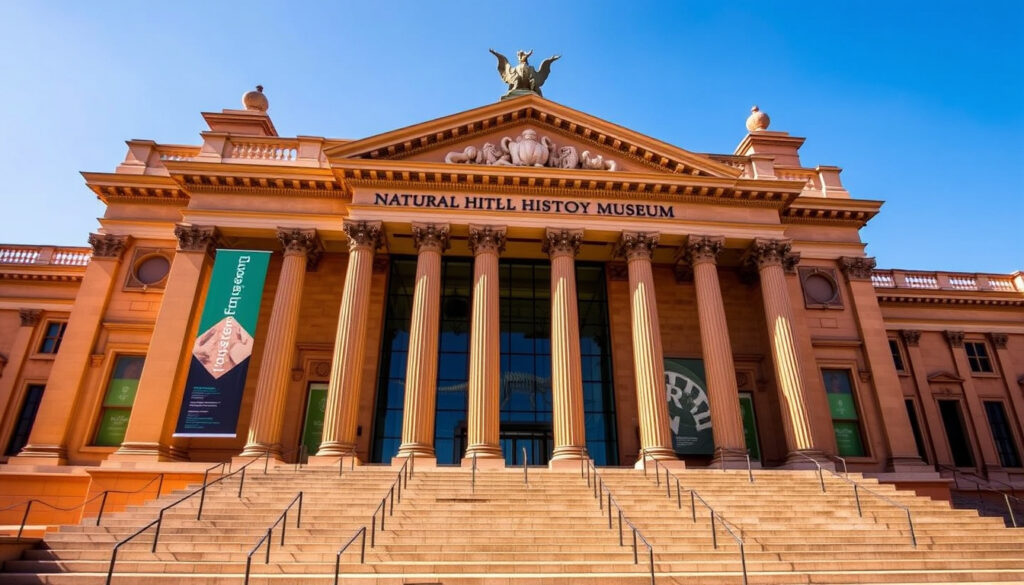
The scale is difficult to convey without visiting. The collection ranges from minerals and gemstones to dinosaurs, mammals, and human biology — all housed in a Victorian terracotta building that itself constitutes a landmark. A TripAdvisor reviewer captured the common reaction: “a breathtaking building, particularly noted for its dinosaur exhibit and a HUGE Blue Whale.”
The British Museum in Bloomsbury runs comparable visitor numbers with free admission to its permanent collection. The Victoria & Albert Museum and the Science Museum, both also in South Kensington, round out the area’s cultural draw but with different collection focuses and slightly lower footfall.
Visitor numbers ranking
- Most visited UK museum: Natural History Museum (~5 million annually)
- British Museum: comparable annual visitor numbers, free permanent collection
- V&A and Science Museum: high traffic, free admission with timed tickets
Why NHM tops the list
The combination of three factors drives the Natural History Museum’s visitor numbers. First, free entry removes the cost barrier that affects visits to paid attractions. Second, the South Kensington location places it in London’s most concentrated museum quarter, adjacent to the V&A and Science Museum — visitors frequently combine all three. Third, the exhibits appeal across age groups, from toddlers pressing buttons in interactive zones to adults reading detailed specimen labels. For those interested in international attractions, Montreal Botanical Garden tickets can provide further details.
Comparisons to British Museum
The British Museum offers free entry to its permanent collection and draws comparable numbers, but the collections differ substantially. The NHM focuses on natural history — biology, geology, fossils, and specimens — while the British Museum covers human history, archaeology, and world cultures. Both are free, both are massive, and both are worth visiting.
Free entry correlates strongly with high visitor numbers across London’s major museums. The Natural History Museum leads because it combines free access with a location, architecture, and collection that consistently impresses visitors across reviews.
The implications for planning are straightforward: expect crowds regardless of when you visit, factor in the pre-booking step to secure your slot, and budget extra time if you want to explore beyond the headline exhibits.
The Upsides
- Free general admission — 80 million specimens accessible without a ticket price
- Hintze Hall and Victorian architecture alone justify the visit
- Family-friendly with interactive zones designed for children and adults
- South Kensington location with easy Tube access and nearby V&A, Science Museum
- Free timed tickets mean you can plan your visit around school holidays
- Permanent displays (blue whale, T.rex, giant sequoia) always available at no extra cost
The Downsides
- Overcrowding is the consistent complaint in TripAdvisor reviews — school holidays and weekends bring queues
- Walk-in entry can be restricted during busy periods, even with free tickets
- On-site cafes and shop receive mixed reviews for value and pricing
- Some areas feel draughty and cold during winter months
- Five-plus hours needed to see everything — a two-hour visit means missing substantial sections
- Peak visiting times mean sharing popular exhibits with hundreds of other visitors
The same crowds that prove the Natural History Museum’s popularity also undermine the experience. A visit during peak season means sharing the dinosaur gallery with hundreds of other visitors, navigating queues for the best photo angles, and competing for space at interactive displays. Pre-booking helps but doesn’t eliminate the reality of a very popular free attraction.
What Visitors Say
TripAdvisor reviews highlight a museum visitors genuinely love — with reservations. Consistent praise goes to the architecture, the blue whale skeleton, the dinosaur gallery, and the free admission policy. The main complaint is overcrowding, with weekend and school holiday visits drawing particular criticism for queue times and congestion in popular galleries.
The Natural History Museum is a top attraction praised for its free entry, impressive exhibits, and stunning Victorian architecture.
TripAdvisor (review aggregator)
Family-focused reviews from MadeForMums note the museum strikes a good balance between educational content and engagement for children, with interactive zones keeping younger visitors interested and attentive. The site recommends wearing comfortable shoes — practical advice given the building’s scale and the time on your feet.
A super-popular museum housed in a breathtaking building, particularly noted for its dinosaur exhibit and a HUGE Blue Whale.
MadeForMums (family review site)
The official museum positioning is direct: prebook your free tickets and you can skip the line and walk straight in. Walk-up visitors are accommodated but may face longer wait times, particularly during busy periods.
Confirmed
- Free main entry from official NHM admissions policy
- 80 million specimens on site
- Most visited UK museum by footfall
- Daily 10:00–17:50 hours with last entry at 17:30
- Closed 24–26 December annually
- Hintze Hall permanently displays blue whale skeleton, T.rex, and giant sequoia
Reported
- Average visit takes 3–4 hours (visitor guide estimates, not official data)
- Walk-up entry restricted during school holidays
- On-site cafes overpriced
- Staff inconsistencies in service
Before You Go
Free general admission makes this one of the best-value attractions in London. The 80 million specimens, dramatic Hintze Hall, and Victorian architecture are accessible to anyone willing to book a free timed ticket. A bit of planning transforms what could be a frustrating experience — crowded galleries, long queues — into one of the capital’s genuinely memorable days out.
Book your free timed entry ticket online before you visit, target a weekday or late-afternoon slot, and arrive prepared for a large building and a lot of walking. For families with children, the strategy is straightforward: start with the Hintze Hall and dinosaur gallery before the crowd builds, then let the kids guide where you go next. The interactive exhibits give you breathing room when other galleries feel too busy.
The Jurassic Oceans: Monsters of the Deep exhibition opens 22 May 2026 from £15 per ticket, offering a paid complement to the free permanent galleries worth considering for dedicated museum visitors. Check www.nhm.ac.uk for the latest on opening hours and current exhibition availability.
Related reading: Bicester Village opening times · Toot Hill Golf Club guide
7wonders.org, tripadvisor.com, madeformums.com, discoversouthken.com, whichmuseum.com, thingshelenloves.com, tripadvisor.com
While free entry draws crowds to see the blue whale skeleton, this exhibits tickets and hours guide expands on key exhibits alongside precise tickets and hours for seamless planning.
Frequently asked questions
Is Natural History Museum London free?
Yes — general admission to the permanent galleries is free. Temporary exhibitions like Jurassic Oceans (opening 22 May 2026, from £15) charge separately. Free timed entry tickets are available to book online.
What are opening hours for Natural History Museum London?
The South Kensington site opens daily 10:00–17:50, with last entry at 17:30. The museum closes 24–26 December annually. Opening times may vary — check the official website or call +44 (0)20 7942 5000 for updates.
Where is the Natural History Museum located?
The main site is on Cromwell Road, South Kensington, London SW7 5BD. South Kensington Tube station (Piccadilly, District, and Circle lines) is the closest station, a short walk from the entrance.
How to get to Natural History Museum London?
South Kensington Tube (Piccadilly, District, Circle lines) is the most straightforward route, a few minutes’ walk from the museum entrance. Several bus routes also serve the Cromwell Road area.
Natural History Museum London with kids tips?
Book free tickets in advance, start with the Hintze Hall and dinosaur gallery, and let children guide the rest of the visit. Wear comfortable shoes, bring snacks, and consider a midweek visit or late afternoon for smaller crowds. The interactive zones give kids hands-on learning while adults appreciate the architecture and specimens.
Best time to visit Natural History Museum London?
Weekday mornings or late afternoons after 3pm are least crowded. Avoid weekends and UK school holidays if possible, or book your free timed entry well ahead. Arrive at opening (10:00) on weekends for a window before the biggest crowds build.
Natural History Museum London highlights?
The Hintze Hall blue whale skeleton, the roaring T.rex, the Dinosaurs Gallery, Earth Hall, Volcanoes and Earthquakes, and the Minerals gallery are consistently cited as must-sees. The giant sequoia in Hintze Hall is a quieter highlight.
Does Natural History Museum London require tickets?
Free timed entry tickets are required for general admission. Book online before visiting. Walk-in entry is permitted but subject to capacity — pre-booking is strongly recommended, particularly during weekends and school holidays.
More related posts
 Caspar Jopling: Ellie Goulding’s Ex-Husband & Art Dealer
 Jac Morgan: Injury, Transfer, Salary & Welsh Rugby Career
 EV Charger Installation Near Me: Ireland Costs & Grants
 Jennifer Lawrence: Biography, Kids, and Latest News
 Fancy Dresses: Trends, Slimming Styles & Where to Buy
 James Gunn Biography: From Troma to Co-CEO of DC Studios
 Helen McCrory: Life, Death, and Cillian Murphy Tribute
 Domain Checker – Free Domain Availability Search (UK)
