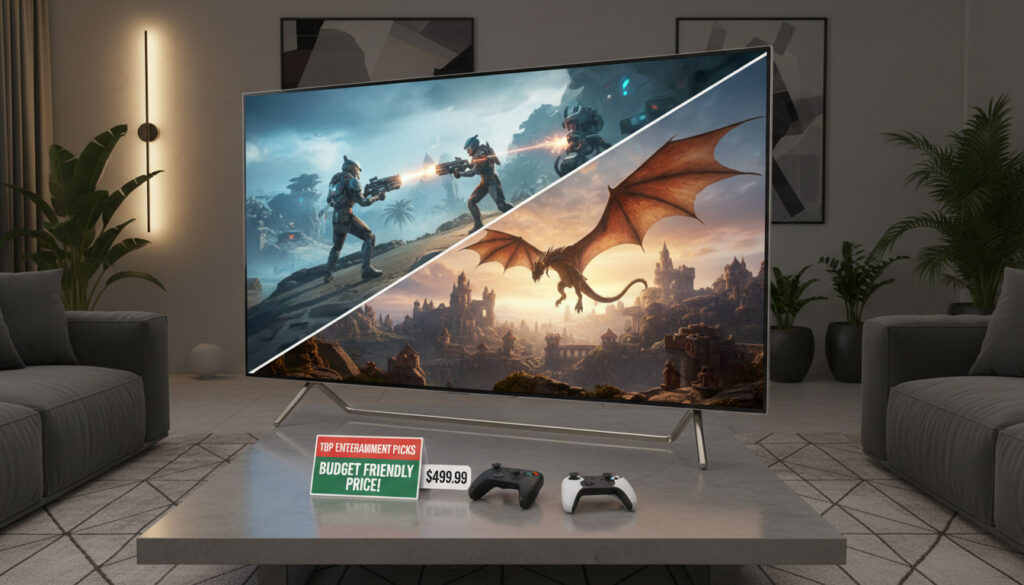
Best 55 Inch TV – Top Picks for Gaming, Movies and Budget
The 55-inch television represents the dominant sweet spot for modern living rooms, balancing immersive screen real estate with practical spatial constraints. Current flagship models like the Samsung S95F and LG C5 leverage QD-OLED and OLED evo panels to deliver reference-grade image quality, while budget alternatives from TCL and Hisense bring 4K gaming performance below $800. Selecting the optimal display requires matching panel technology to room brightness, gaming requirements, and viewing distance rather than pursuing specifications alone.
According to comprehensive testing by RTINGS and TechRadar, the Samsung S95F (QN55S95FAFXZA) currently leads the category for its exceptional brightness in gaming mode, anti-glare matte coating, and 4K@144Hz support. For PlayStation 5 enthusiasts, the LG C5 offers comparable input lag with superior Dolby Vision compatibility, while value seekers increasingly gravitate toward Mini-LED alternatives that sacrifice viewing angles for luminance.
What Is the Best 55-Inch TV Overall?
The Samsung S95F emerges as the consensus top performer across professional reviews, distinguished by its QD-OLED panel that achieves higher peak luminance than traditional OLED displays while maintaining infinite contrast ratios. RTINGS testing confirms its suitability for bright rooms, sports content, and competitive gaming through features like variable refresh rate (VRR) and sub-10ms input lag.
| Model | Panel Technology | Optimal Use Case | Price Tier |
|---|---|---|---|
| Samsung S95F | QD-OLED | All-around/Gaming | Premium ($1300+) |
| LG C5 OLED | OLED evo | Dark room gaming | Mid-high ($1000-$1300) |
| TCL 55QM6K | Mini-LED QLED | Budget gaming | Budget ($600-$800) |
| Hisense 55U8QG | Mini-LED | Bright rooms/Sports | Budget-mid ($800-$1000) |
Key Insights for 55-Inch TV Buyers:
- QD-OLED technology bridges the gap between OLED contrast and QLED brightness, ideal for mixed lighting environments.
- All flagship 55-inch models now support 4K@144Hz through HDMI 2.1, essential for PlayStation 5 and high-end PC gaming.
- Mini-LED alternatives provide superior value under $1000 but restrict optimal viewing to narrow angles.
- Matte anti-glare coatings, exclusive to high-end models like the S95F, significantly improve daytime visibility.
- Smart OS ecosystems vary by manufacturer: Tizen (Samsung), webOS (LG), and Google TV (TCL/Hisense).
- Gaming performance correlates strongly with input lag measurements below 10ms rather than resolution alone.
- Prices for 2025/2026 models fluctuate seasonally, with Black Friday discounts often reaching budget-tier levels.
| Feature | Top Overall (Samsung S95F) | Top Budget (TCL 55QM6K) | Top Gaming (LG C5) |
|---|---|---|---|
| Native Resolution | 3840 x 2160 (4K) | 3840 x 2160 (4K) | 3840 x 2160 (4K) |
| Display Technology | QD-OLED | Mini-LED QLED | OLED evo |
| Peak Refresh Rate | 144Hz | 144Hz (288Hz at 1080p) | 144Hz |
| HDR Support | HDR10, HLG | HDR10+, Dolby Vision | Dolby Vision, HDR10 |
| Gaming Features | VRR, ALLM, 4K@144Hz | VRR, ALLM, Low Lag Mode | VRR, ALLM, G-Sync Compatible |
| Smart Platform | Tizen OS | Google TV | webOS |
| HDMI 2.1 Ports | 4 | 2 | 4 |
| Typical Price Range | $1500-$2000 | $600-$800 | $1000-$1300 |
What Is the Best 55-Inch TV for Gaming?
Gaming performance hinges on three technical metrics: input lag below 10ms, native 144Hz refresh rates, and full HDMI 2.1 bandwidth support. The LG C5 and Samsung S95F currently dominate this category, though video analysis indicates the S95F achieves higher sustained brightness during HDR gameplay, reducing eye strain in extended sessions.
How Refresh Rate and Input Lag Define Gaming Performance
Variable Refresh Rate (VRR) technology eliminates screen tearing by synchronizing the TV’s refresh cycle with the console’s output, a feature now standard across recommended models. The TCL 55QM6K delivers competitive 144Hz performance at a budget price point, though its narrower viewing angles restrict optimal couch positioning compared to OLED alternatives.
Which Models Lead for PS5 and PC Gaming
Samsung’s S95F pairs its 144Hz panel with a matte anti-glare coating rarely found on consumer displays, minimizing reflections from windows during daytime gaming. TechRadar testing confirms its color volume exceeds traditional OLEDs when displaying HDR content. LG’s C5 counters with superior near-black handling and Dolby Vision gaming support, critical for titles optimized for that format.
What Is the Best Budget 55-Inch TV?
Value-oriented buyers increasingly find Mini-LED technology democratizing high-refresh gaming previously restricted to premium OLEDs. The TCL 55QM6K (also designated QM7K or C805 in certain markets) offers 4K@144Hz, VRR, and Google TV integration between $600 and $800, though What Hi-Fi notes its audio output requires external reinforcement.
Top Performers Under $800
Hisense’s 55U8QG competes aggressively on brightness, leveraging Mini-LED backlights to combat glare in sunlit rooms where OLEDs wash out. Both TCL and Hisense prioritize gaming latency over cinematic color accuracy, making them ideal for sports and competitive gaming rather than critical film viewing.
Understanding Budget TV Trade-offs
Affordable 55-inch displays universally sacrifice viewing angle stability and out-of-box color calibration. Centered seating arrangements mitigate these limitations, but users expecting consistent image quality from off-axis positions should consider stretching to LG’s entry-level B4 series or previous-generation C4 models during clearance events.
OLED vs QLED: Best 55-Inch TV for Picture Quality?
The choice between OLED and QLED/Mini-LED fundamentally concerns ambient light control. OLED panels achieve perfect blacks by deactivating individual pixels, creating infinite contrast ratios ideal for dedicated media rooms. QLED and Mini-LED variants rely on dense backlight zones to approximate contrast, trading perfect blacks for searing brightness levels exceeding 2,000 nits on flagship models.
OLED Advantages for Dark Room Viewing
Sony’s Bravia 8 II joins the Samsung S95F and LG C5 in utilizing OLED technology to eliminate halo effects around bright objects on dark backgrounds. LG’s Alpha 9 AI processor upscales sub-4K content with artifact reduction superior to previous generations, while Sony focuses on motion handling for sports broadcasting.
QLED and Mini-LED Brightness Benefits
TCL and Hisense leverage thousands of Mini-LED背光 zones (backlight zones) to minimize blooming while delivering luminance levels impossible for current OLEDs to match. This advantage proves decisive for daytime sports viewing or installations opposite large windows, though RTINGS measurements show these panels cannot produce true black levels.
Samsung’s QD-OLED implementation in the S95F combines quantum dot color filters with OLED emissive layers, achieving higher color volume and peak brightness than traditional WOLED panels found in the LG C5 while maintaining self-emissive contrast.
LG’s C5 supports Dolby Vision HDR, a dynamic metadata format utilized by Netflix and Apple TV+, whereas Samsung’s S95F relies on HDR10+ and standard HDR10, potentially impacting streaming content presentation depending on platform.
Mini-LED models from TCL and Hisense exhibit significant color shifting and contrast loss when viewed from angles exceeding 20 degrees off-center, unlike OLED alternatives that maintain fidelity up to 60 degrees.
When Do New 55-Inch TV Models Release?
Television manufacturers operate on predictable annual cycles that influence pricing and availability for 55-inch models. Understanding this cadence helps avoid purchasing obsolete hardware or overpaying for soon-to-be-replaced flagships.
- Manufacturers unveil flagship lineages including the LG C5 and Samsung S95F to press and retailers, establishing technical specifications and suggested retail pricing for the year.
- Spring release windows see initial shipments of premium OLED models reaching North American and European retail channels, typically launched at peak pricing.
- Mid-generation firmware updates and minor refreshes address early adopter complaints, while previous year models (C4, S90C) enter clearance phases.
- Black Friday and Cyber Monday promotions discount current-year models by 20-30%, representing optimal purchase timing for value-conscious buyers.
- Trade publications leak specifications for following year’s models, informing purchase decisions for those willing to wait for spring releases.
What Is Certain About 55-Inch TV Pricing and What Remains Variable?
The 55-inch TV market exhibits concrete technical standards alongside volatile commercial factors that complicate purchase timing. Buyers should distinguish between immutable hardware capabilities and fluctuating market conditions.
| Established Technical Facts | Uncertain or Variable Factors |
|---|---|
| All recommended flagship models support HDMI 2.1, 4K@144Hz, and VRR standards required for PlayStation 5 and Xbox Series X optimization. | Exact street prices vary weekly between retailers; identical models may cost $200-$400 more depending on promotional calendars. |
| QD-OLED panels achieve measurably higher peak brightness than traditional OLED evo or WOLED technologies. | Regional model numbering creates confusion; the TCL 55QM6K sells as QM7K or C805 in international markets with varying software loads. |
| Mini-LED displays objectively outperform OLED in luminosity tests exceeding 1,500 nits, but cannot produce true black levels. | Long-term burn-in resistance statistics for 2025/2026 OLED panels remain unverified over multi-year ownership periods. |
| Input lag measurements below 10ms correlate directly with competitive gaming performance across all panel types. | Availability of specific color finish variants (silver vs. black bezels) fluctuates based on manufacturing batches. |
Is a 55-Inch TV Big Enough for My Room?
The 55-inch display size optimally serves living spaces between 150 and 250 square feet, with ideal viewing distances ranging from 5 to 8 feet according to RTINGS viewing distance calculations. This range corresponds to 1.5 to 2 times the screen diagonal, ensuring immersive 4K resolution without visible pixel structure or eye strain.
Room lighting determines panel selection more than dimensions. Dark basement installations favor OLED technology for contrast, while open-concept living areas with windows benefit from Mini-LED brightness or matte-coated OLEDs like the Samsung S95F. Seating arrangements also factor into the decision; households requiring wide off-center viewing should avoid budget Mini-LED models with narrow optical layers.
What Do Expert Reviews Reveal About 55-Inch TV Performance?
Professional evaluation labs and consumer aggregate data provide contrasting but complementary perspectives on 55-inch display capabilities. Technical measurements from RTINGS emphasize luminance and color accuracy, while retail feedback highlights usability concerns.
“The Samsung S95F stands out as the top 55-inch TV for 2026 across reviews, praised for its versatile QD-OLED performance in gaming, sports, bright rooms, and home theaters, with top-tier image quality, high brightness, matte anti-glare coating, and features like 4K@144Hz, VRR, and fast response times.”
— RTINGS Technical Testing Laboratory
Sony’s Bravia 8 II delivers QD-OLED contrast combined with quantum dot vibrancy, earning distinction for processing detail in motion-heavy sports content while maintaining natural color reproduction absent from over-saturated competitors.
— What Hi-Fi Editorial Review
Customer aggregation from Best Buy purchase data indicates LG C5 owners specifically praise vibrant OLED pictures, gaming refresh rates, and webOS ease of use, though a subset reports remote control responsiveness issues and glare in non-optimized rooms.
— Best Buy Verified Purchase Analytics
Final Recommendations
The Samsung S95F justifies its premium pricing for users demanding uncompromising brightness and anti-glare performance, while the LG C5 offers superior value for dedicated dark-room gaming with Dolby Vision support. Budget installations should prioritize the TCL 55QM6K for its 144Hz gaming capabilities under $800, provided seating remains centered. Prospective buyers should measure viewing distances, assess ambient lighting, and consult current listings before committing, as model year transitions create temporary pricing volatility. For detailed technical definitions and setup guidance, refer to our comprehensive television buying guide.
Frequently Asked Questions
Which 55-inch TV performs best for sports watching?
High brightness and motion handling prioritize the Samsung S95F, Hisense 55U8QG, or TCL 55QM6K. Their luminance levels and anti-glare coatings maintain visibility during daytime broadcasts, while 144Hz refresh rates eliminate motion blur during fast action.
What distinguishes the best 55-inch smart TVs?
Smart TV quality depends on ecosystem preference: Tizen (Samsung) offers gaming hub integration, webOS (LG) provides intuitive navigation, and Google TV (TCL/Hisense) delivers superior content aggregation and Chromecast compatibility.
What room dimensions suit a 55-inch television?
Spaces between 150-250 square feet accommodate 55-inch displays ideally, with primary seating positioned 5-8 feet from the screen. Larger rooms require brighter panel technology (Mini-LED or QD-OLED) to maintain perceived contrast.
Is OLED technology worth the premium over QLED at 55 inches?
OLED justifies higher costs exclusively for dark-room viewing or critical film applications where infinite contrast matters. Bright living rooms negate OLED advantages, making Mini-LED QLED alternatives more practical and cost-effective.
Do all 55-inch TVs support PlayStation 5 features?
No. Only specific models with HDMI 2.1 ports, 120Hz+ native refresh rates, and VRR support (LG C5, Samsung S95F, TCL QM6K) enable 4K@120Hz gaming. Budget models lacking HDMI 2.1 restrict PS5 output to 60Hz at 4K resolution.
How does QD-OLED differ from standard OLED?
QD-OLED replaces traditional color filters with quantum dot layers, increasing color volume and peak brightness by approximately 30% while maintaining self-emissive pixel control for perfect blacks.
Why do Mini-LED TVs cost less than OLEDs?
Mini-LED technology utilizes conventional LCD panels with dense LED backlights rather than organic emitters, reducing manufacturing complexity and material costs while achieving competitive brightness at the expense of viewing angles and black levels.
More related posts
 Toot Hill Golf Club – Essex Parkland Guide with Fees and Reviews
 Ava Gardner Biography: Love, Secrets, and Death
 Gillette Fusion 5 Blades – Specs, Reviews, Prices Guide
 Gwyneth Keyworth: Welsh Actress, BAFTA Winner & TV Roles
 Mo Gilligan: Biography, Wife, Children, Net Worth & Career
 Joan Templeman: What Happened to Richard Branson’s Wife
 Andrew Scarborough: Actor from Downton Abbey and Emmerdale
 Punjab Kings vs Rajasthan Royals Match Scorecard – Result
