USB to USB-C – Guide to Cables, Speeds and Charging
USB to USB-C: A Complete Guide to Understanding and Using These Essential Cables
Connecting older devices with newer ones often requires understanding the bridge between legacy USB-A ports and modern USB-C connectors. These cables and adapters have become essential tools as technology transitions, enabling everything from phone charging to data transfers between different hardware ecosystems.
USB-A to USB-C cables serve a specific purpose in today’s mixed connectivity environment. While USB-C has emerged as the dominant standard—with adoption reaching 82% of laptops by 2025 compared to just 35% in 2020—older infrastructure remains widespread in homes, offices, and vehicles. Understanding the capabilities and limitations of these intermediary solutions helps consumers make informed purchasing decisions and avoid common compatibility pitfalls.
What is a USB to USB-C Cable?
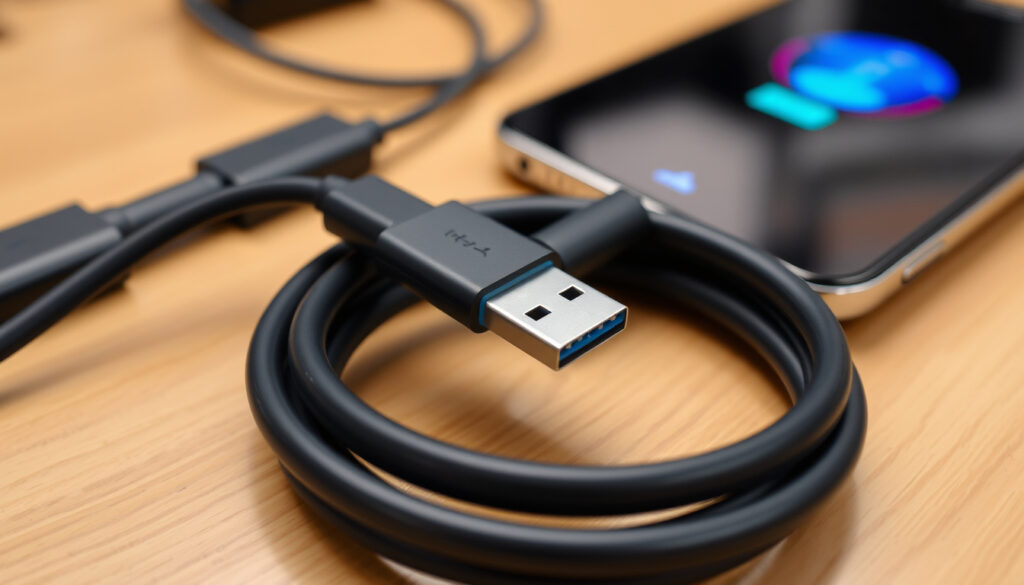
A USB to USB-C cable features a rectangular USB-A connector on one end and an oval USB-C connector on the other. This configuration allows devices with traditional USB-A ports—such as older laptops, car chargers, and wall adapters—to communicate with newer equipment equipped with USB-C ports, including modern smartphones, tablets, and accessories. The cables work immediately upon connection, requiring no additional software or configuration in most cases.
USB Standards and What They Mean for Speed
Not all USB to USB-C cables perform equally. The underlying USB specification determines maximum data transfer speeds and power delivery capabilities. USB 2.0 cables deliver 480Mbps data throughput with 2.5 to 4.5 watts of charging power—adequate for basic peripherals but frustratingly slow for file transfers. Moving up the hierarchy, USB 3.0 and 3.1 Gen 1 specifications enable 5Gbps transfers with slightly improved charging up to 7.5 watts. The USB 3.2 Gen 2 standard represents the practical ceiling for USB-A to USB-C setups, offering 10Gbps transfers and supporting Quick Charge 3.0 at up to 60 watts for compatible devices.
- USB 2.0 cables should only be used for low-power devices or when speed is not a priority
- USB 3.1/3.2 Gen 2 cables are recommended for any data-heavy tasks like video transfers
- Always check cable labels—many cheap cables claim high specs without delivering
- Higher-rated cables work on slower ports, but not vice versa
- USB-IF certification provides verification that cables meet claimed specifications
- Strain relief at connector joints indicates better build quality and longer lifespan
- OTG (On-The-Go) support may be needed for phone-as-host configurations like flash drives
| Aspect | USB-A to USB-C | Notes |
|---|---|---|
| Max Speed | USB 2.0: 480Mbps, USB 3: 5Gbps | Depends on port and cable quality |
| Charging | Up to 18W typical | PD requires USB-C both ends |
| Direction | One-way (A male to C male) | Not reversible like C-to-C |
| Data Transfer | Up to 10Gbps (Gen 2) | Backward compatible with slower |
| Power Delivery | Not supported | USB-A lacks the necessary wiring |
| Quick Charge 3.0 | Up to 60W supported | Device must be QC-compatible |
What is the Difference Between USB-A and USB-C?
USB-A and USB-C represent two fundamentally different approaches to connectivity. USB-A, introduced with USB 1.0 in 1996, features a flat, rectangular connector designed for unidirectional insertion. Users must orient the plug correctly, which becomes increasingly frustrating as the ports age and the tolerance narrows. USB-A ports remain ubiquitous in legacy equipment—desktop computers, older vehicles, traditional wall chargers, and countless peripherals still rely on this decades-old standard.
USB-C, standardized in 2014, introduced a smaller, oval connector with a fully reversible design. This means the plug inserts correctly regardless of orientation, eliminating the fumbling that USB-A requires. Beyond convenience, USB-C supports substantially higher power delivery and data speeds through additional pins not present in the USB-A configuration. Where USB-A maxes out at around 18 watts without proprietary extensions, USB-C can negotiate up to 240 watts through USB Power Delivery 3.1 when all components support the standard.
Why USB-A to USB-C Connections Have Limitations
The USB-A connector simply lacks the physical contacts required for USB Power Delivery negotiation. PD requires dedicated pins that exist in USB-C ports but were never included in the USB-A design. This means a USB-A to USB-C cable cannot transmit the signaling necessary for high-wattage charging, regardless of how powerful the source charger might be. The USB-A end acts as a permanent bottleneck, limiting the entire chain to whatever power the USB-A port can provide through standard protocols.
USB-A to USB-C cables top out at approximately 18 watts through standard protocols. Even when connected to a powerful USB-A port, the lack of PD wiring means devices cannot request higher voltages and amperages. Quick Charge 3.0 offers an alternative path at up to 60 watts for compatible devices, but this requires both the source and device to support Qualcomm’s protocol—separate from the USB PD standard that modern laptops typically require.
Data Speed Asymmetries
Data transfer speeds follow similar constraints. USB 2.0 ports, still common in many devices, limit throughput to 480Mbps regardless of cable quality. Even premium USB 3.2 Gen 2 cables cannot overcome port limitations—a cable rated for 10Gbps connected to a USB 2.0 port will perform at 480Mbps. Conversely, higher-rated cables adapt automatically to whatever port they’re connected to, making overspecification preferable to under specification when purchasing.
How Do USB-A and USB-C Devices Connect?
Connecting devices requires matching the right cable or adapter type to your specific situation. USB-A to USB-C cables provide the simplest solution when moving data or charging between a USB-A source and a USB-C device. The cable plugs directly into both ports without intermediate hardware. Adapters serve a different purpose—they convert a USB-C port on your device into a USB-A port, effectively reversing the flow or enabling USB-A peripherals to connect to USB-C hosts.
Cable vs. Adapter: Choosing the Right Solution
USB-A to USB-C cables excel when you need to regularly connect newer devices to older infrastructure. If your car charger, desk lamp with USB port, or wall adapter dates from before 2020, a cable provides the permanent bridge you need. Adapters prove more valuable when troubleshooting—connecting a USB-C flash drive to a USB-A laptop, or using legacy USB-A accessories with modern devices that lack older ports. For those building a universal charging station, exploring USB-C charging solutions can help streamline your setup.
For data transfer at maximum speeds, verify both the cable specification and the port specifications on your devices. A USB 3.2 Gen 2 cable connected to a USB 2.0 port delivers USB 2.0 performance. Always check the smallest link in your connection chain when troubleshooting slow transfers.
Ensuring Compatibility Across Devices
Compatibility rarely presents issues when physically connecting USB-A to USB-C devices. The USB specification deliberately maintains backward compatibility across generations. A USB-C device will accept connection from a USB-A source through an appropriate cable or adapter. Problems arise not from the physical connection but from expectations—users expecting laptop-charging speeds from a car USB-A port will be disappointed, and those anticipating USB 3.2 speeds from a USB 2.0 port will wait impatiently for large file transfers.
Can I Use a USB-A to USB-C Cable for Charging?
Yes, USB-A to USB-C cables support charging, but the speeds achieved depend heavily on the USB-A source and cable quality. Standard USB-A ports without Quick Charge support deliver between 2.5 and 7.5 watts—enough to slowly charge a smartphone overnight but inadequate for power-hungry devices like tablets or laptops. These cables will charge virtually any USB-C device, just at varying speeds depending on the source’s capabilities.
Quick Charge 3.0-capable sources paired with QC-compatible devices and cables can reach 60 watts, significantly improving charging times for smartphones and small electronics. This represents the practical maximum for USB-A to USB-C configurations. Users seeking the fastest possible charging for modern laptops and tablets must use USB-C to USB-C cables with Power Delivery-compatible chargers—the USB-A bridge simply cannot support these higher power levels regardless of cable quality.
Can USB-C Charge USB-A Devices?
Physically impossible without an adapter. USB-C ports require USB-C cables, and USB-A devices require USB-A connectors. However, USB-C to USB-A adapters exist for this exact purpose. These small adapters convert a USB-C plug into a USB-A female port, allowing USB-A cables to connect to USB-C sources. This configuration works for data and charging in the USB-A device direction—the USB-C source powers the USB-A device, limited by USB-A power delivery standards.
What is the Best USB to USB-C Cable?
The optimal cable depends on intended use, but certain specifications consistently indicate higher quality. For most users, USB 3.2 Gen 2 cables with Quick Charge 3.0 support provide the best balance of compatibility and performance. These cables handle 10Gbps data transfers and up to 60-watt charging, covering the vast majority of use cases including smartphone charging, file transfers, and peripheral connections.
Build quality matters significantly for longevity. Cables with substantial strain relief at the connector joints resist the fraying and breakage that causes most cable failures. USB-IF certification provides assurance that the cable actually meets its claimed specifications—a surprisingly common issue with budget cables that display certification logos without proper testing. Premium options like the CableCreation USB-A to C cable combine 60-watt Quick Charge 3.0 support with durable construction suitable for daily use.
Recommended Adapters for Specific Needs
The UGREEN 4-pack adapter provides reliable 10Gbps data transfer at an accessible price point, making it suitable for users who need multiple adapters around the home or office. Those prioritizing maximum data transfer speeds should consider the Mindorlen USB 3.1 adapter, which consistently delivers top-tier performance in testing. The Mepsies 4-pack offers the most compact option for travel or mobile use, fitting easily into pockets or device cases without adding noticeable bulk.
Non-certified cables and adapters represent a genuine risk. Counterfeit cables with falsified specifications have caused device damage and, in rare cases, fires. The USB-IF certification logo provides verification—cables without certification claims should be approached with skepticism, particularly when pricing seems too good to be true.
A Timeline of USB Standards
The USB standard has evolved substantially since its introduction, with each generation adding capabilities that shape modern connectivity. Understanding this progression helps contextualize why USB-A to USB-C cables exist and what performance limits they inherit from older specifications.
- 2000: USB 2.0 introduced, establishing the 480Mbps standard that remains relevant today in budget cables and low-power devices
- 2008: USB 3.0 launched with 5Gbps throughput, recognizable by blue connector internals in USB-A ports
- 2014: USB-C connector specification finalized, enabling reversible connections and higher power delivery
- 2019: USB4 announced, aligning with Thunderbolt 3 to provide 40Gbps through USB-C ports exclusively
- 2021: USB Power Delivery 3.1 extended maximum power to 240 watts, enabling laptop charging via USB-C
- 2025: USB-C adoption reaches 82% of laptops, with EU mandates pushing universal charging requirements
What is Established vs. Uncertain
When researching USB to USB-C cables, distinguishing established facts from marketing claims requires attention. The technical specifications outlined in official USB-IF documentation represent reliable benchmarks, while third-party reviews from trusted technology publications like TechRadar and The Verge offer practical performance insights. Always verify claims against multiple sources and look for USB-IF certification when available.
For those transitioning between ecosystems, understanding the fundamental differences between connector types prevents costly mistakes. Resources from Wired and CNET provide accessible explanations of USB technology evolution. Whether you’re outfitting a home office or simply need to charge your phone from an older charger, quality accessories make a meaningful difference in daily convenience.
The transition from USB-A to USB-C represents the most significant change in consumer connectivity since the original USB standard debuted in 1996.
USB-A to USB-C cables remain essential tools in this transitional period. While the industry moves steadily toward USB-C as the universal standard, these cables bridge the gap between legacy infrastructure and modern devices. Understanding their capabilities and limitations ensures you select the right cable for your needs and avoid disappointment when performance doesn’t match expectations set by newer standards.
Final Recommendations
For most consumers, investing in USB 3.2 Gen 2 certified cables with Quick Charge 3.0 support provides the best combination of compatibility and performance. These cables handle the majority of use cases without the premium pricing of specialized solutions. Keep a quality USB-A to USB-C cable in your bag or car for those moments when only legacy ports are available, and consider adding a USB-C to USB-A adapter for reverse compatibility scenarios.
The future of USB connectivity continues to evolve, with USB4 and emerging standards promising even faster transfers and higher power delivery. Staying informed about these developments helps future-proof your accessory purchases and ensures you’re ready for the next generation of devices.
Frequently Asked Questions
What is a USB to USB-C cable?
A USB to USB-C cable features a rectangular USB-A connector on one end and an oval USB-C connector on the other. This configuration allows devices with traditional USB-A ports to communicate with newer equipment equipped with USB-C ports.
Can I use a USB-A to USB-C cable for charging?
Yes, USB-A to USB-C cables support charging, but speeds depend on the USB-A source and cable quality. Standard ports deliver 2.5-7.5 watts, while Quick Charge 3.0 can reach up to 60 watts for compatible devices.
What’s the difference between USB-A and USB-C?
USB-A features a flat, rectangular connector requiring correct orientation, while USB-C is smaller, oval, and fully reversible. USB-C supports higher power delivery (up to 240W with PD 3.1) and faster data speeds than USB-A.
Why can’t USB-A to USB-C cables support Power Delivery?
The USB-A connector lacks the physical contacts required for USB Power Delivery negotiation. PD requires dedicated pins that exist in USB-C ports but were never included in the USB-A design.
Can USB-C charge USB-A devices?
Physically impossible without an adapter. USB-C to USB-A adapters convert a USB-C plug into a USB-A female port, allowing USB-A cables to connect to USB-C sources for data and charging.
What is the best USB to USB-C cable?
For most users, USB 3.2 Gen 2 cables with Quick Charge 3.0 support provide the best balance of compatibility and performance, handling 10Gbps data transfers and up to 60-watt charging for most use cases.
More related posts
 Hello in Different Languages – 50+ Greetings with Pronunciations
 YNW Melly 2026 Update: Still Locked Up? Status, Trial & Release
 Best Indian Restaurants Near Me: Top Picks Ireland & Dish Guide
 Paul Scholes: Son’s Autism, Marriage & Ronaldo’s Praise
 Clark Kent: The Secret Identity of Superman Explained
 Joe Gilgun: Biography, ADHD, and Brassic Career
 Nigel Planer: The Young Ones to Discworld Narrator
 The Gain borough Bath Spa: Worth the Price? 2026 Review
